Icon about-block-ico-1 Icon about-block-ico-2 Icon about-block-ico-3 Icon about-block-ico-4 Icon announcement-close Icon arrow-left Icon arrow-right Icon arrow-sm Icon asterisk Icon banner-transparent-vector Icon btn-callback-ico Icon careers-item-location Icon careers-item-time Icon careers-item-type Icon careers-mail-ico Icon careers-phone-ico Icon careers-search-ico Icon careers-single-hero-vector Icon careers-single-more-vector Icon careers-vector Icon check Icon close Icon dfm-image-left-vector Icon dfm-image-right-vector Icon document Icon download-popup-vector Icon dropdown Icon envelope Icon facebook Icon faq-banner-bg Icon faq-title-ico-active Icon faq-title-ico Icon featured-links-block-bg Icon figure-1 Icon figure-10 Icon figure-11 Icon figure-12 Icon figure-13 Icon figure-14 Icon figure-15 Icon figure-2 Icon figure-3 Icon figure-4 Icon figure-5 Icon figure-6 Icon figure-7 Icon figure-8 Icon figure-9 Icon file-upload Icon form-sidebar-back Icon form-step-done Icon gmap-marker-group-icon Icon gmap-marker-icon Icon header-profile-ico Icon instagram Icon link Icon linkedin Icon loader Icon mail Icon phone Icon play-yt Icon play Icon post-nav-arr-left Icon quote-banner-vector Icon quote-block-aside-vector Icon quote-contact-phone-ico Icon quote-contact-position-ico Icon sidebar-location Icon sidebar-phone Icon technology-banner-nav-left-vector Icon technology-banner-nav-right-vector Icon twitter Icon webinar-item-date-vector Icon whitepaper-img-ico-left Icon whitepaper-img-ico-right Icon whitepapers-listing-banner-ico Icon whitepapers-single-aside-vector Icon youtube Icon yt-play-button

China Best Marine Induction Cooker Supplier?

Choosing a China-based Marine Induction Cooker supplier takes more than comparing prices and polished product photographs. A vessel’s galley has tight counter space, changing electrical loads, and cookware that can shift when the sea turns rough. Buyers need to check rated power, mounting dimensions, ventilation, control visibility, and access to replacement parts. Small details matter. A control panel that is hard to read at night can be a real drawback.

Efficiency offers one useful comparison point. The U.S. Department of Energy’s Energy Saver guidance says induction cooking is about 5–10% more efficient than conventional electric resistance cooking and roughly three times as efficient as gas cooking. These figures describe cooking technology generally, not marine models specifically. The International Energy Agency’s Electricity 2024 report also records a 2.2% rise in global electricity demand in 2023. That broader trend reinforces the value of checking a cooker’s actual power draw against the vessel’s electrical system.

Public, independently verified data comparing marine induction cooker suppliers remains limited. I also cannot verify a named specialist’s published quotation on this specific topic, so attributing one would risk misleading readers. A sound supplier review should instead examine test documentation, material specifications, warranty terms, and service arrangements. Ask for clear evidence. Then compare it with the conditions onboard, not just the catalogue.
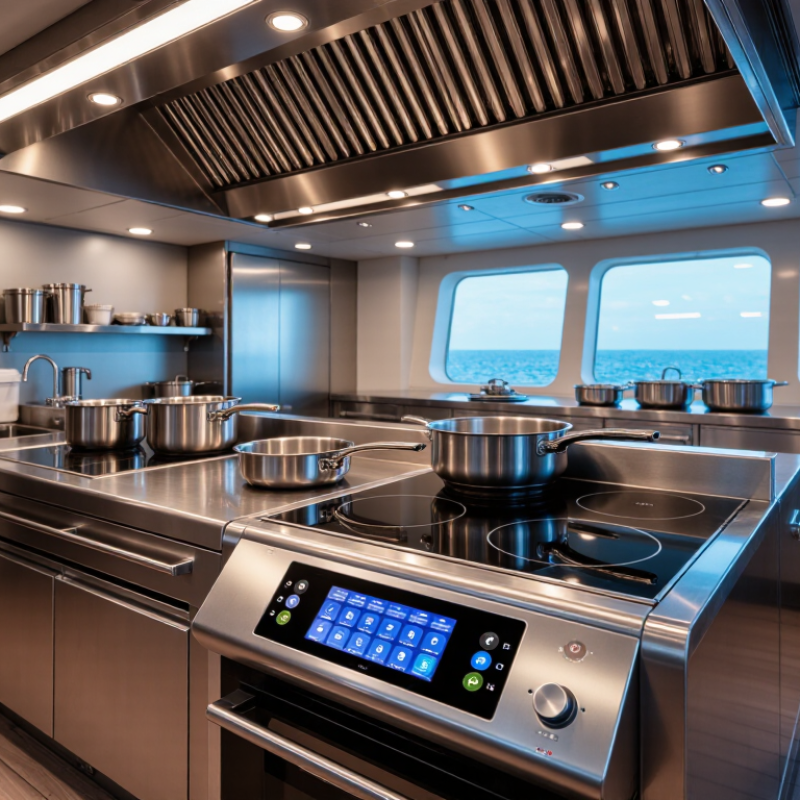
China Best Marine Induction Cooker Supplier?

Understanding Marine Induction Cookers and Their Applications

Marine induction cookers heat compatible cookware through electromagnetic energy rather than an exposed flame. In a vessel galley, that can simplify cooking in compact spaces and reduce open-flame concerns. The pan still becomes hot, and spilled food can bake onto the glass surface. That matters at sea. A pot sliding during a turn is more than an inconvenience, so secure placement and suitable cookware are important.

Installation depends on the vessel’s electrical system. Many units require substantial power, especially when several appliances run together. Check the cooker’s rated load against the inverter, generator, wiring, and circuit protection. A qualified marine electrician should assess the setup. The appliance also needs secure mounting and room for cooling airflow; a tight cabinet may cause overheating or reduce performance. Salt air and vibration deserve attention, too, though they are easy to overlook during selection.

These cookers can suit yachts, ferries, and workboats with reliable electrical capacity and suitable galley layouts. Before choosing one, test cookware with a magnet: if it sticks firmly to the base, the pan is more likely to work. A small magnet helps. Compare control visibility, cleaning access, mounting options, and service support, not just cooking power. One detail is often underestimated: crew members may need time to adjust heat settings, since induction responds quickly and unfamiliar controls can feel abrupt.

Key Standards for Evaluating Chinese Suppliers

China Best Marine Induction Cooker Supplier?

Key Standards for Evaluating Chinese Suppliers

Choosing a marine induction cooker supplier in China takes more than comparing quoted prices. Ask for technical documents covering the intended vessel’s voltage, frequency, rated power, and installation conditions. Request evidence of testing against applicable marine electrical, electromagnetic compatibility, and vessel-class requirements. A certificate alone proves little.

Check whether the supplier can show consistent production controls, traceable components, and documented final inspections. Ask for test records covering heat, vibration, moisture, and salt exposure where relevant to the installation. Review the cooker’s mounting dimensions, ventilation needs, over-temperature protection, and cookware detection. Small details matter.

A factory tour can help, but it cannot replace dated inspection reports or sample testing. Confirm who handles warranty claims, replacement parts, and technical questions after delivery. Compare the response with your project’s expected service life and operating conditions. Some gaps remain. No supplier’s claims should be accepted without checking that the documents match the exact model and configuration being quoted.

Comparing Supplier Capabilities and Product Features

When comparing marine induction cooker suppliers, look beyond rated power and countertop appearance. A unit may heat quickly in a showroom yet perform differently on a vessel with limited electrical capacity. Ask for operating-voltage ranges, power-control steps, and installation dimensions. Then compare them with the vessel’s actual supply and galley layout.

Marine use adds practical demands. Check how the cooking surface handles spills, whether controls are clear in dim light, and how easily technicians can access connections. Ask suppliers for test documentation, installation guidance, and details about vibration and moisture considerations.

Small details matter.

A recessed control panel, for example, may be easier to wipe down, but less convenient with wet hands.

Supplier support deserves the same scrutiny as product features. Request realistic lead times for replacement parts and a clear warranty process. A technical response should address your vessel’s specifications, not simply repeat brochure claims. I would also ask for references from comparable installations, while recognizing that one vessel’s experience may not predict yours. No comparison is perfect; record unanswered questions before choosing a supplier.

Verifying Certifications, Quality, and After-Sales Support

When comparing marine induction cooker suppliers, look beyond price and polished brochures. Ask for current certificates tied to the exact model and intended marine use. Verify the issuer, scope, expiry date, and model number; a certificate for another unit proves little. Request test records for electrical safety, vibration, heat, and moisture resistance. Check that labels, manuals, and reports describe the same configuration. Small mismatches matter.

Tips: Ask for a sample, then inspect its glass surface, controls, cable entry, and mounting points. Request photos of packed units and a written inspection checklist. Keep records.

Quality also shows in how a supplier handles questions after delivery. Confirm response hours, spare-part availability, warranty exclusions, and the process for diagnosing faults remotely. Ask who pays shipping for a replacement and how quickly common parts can be dispatched. A clear service contact is more useful than a broad promise. I would treat one factory sample as only one data point; production batches can still vary. Ask for batch inspection records, and review them against your vessel’s installation conditions.

Steps for Selecting a Supplier for Your Vessel

China Best Marine Induction Cooker Supplier?

Steps for Selecting a Supplier for Your Vessel

Start with the vessel, not the catalogue. Confirm available voltage, frequency, installation space, and cooking capacity. A unit that fits a home galley may not suit a compact vessel kitchen. Check mounting clearances, ventilation needs, and resistance to moisture and vibration. Ask the supplier for product specifications and test records relevant to marine use. Requirements can vary by vessel and operating area, so verify them with your technical team.

Then assess how the supplier supports the equipment after delivery. Request details on warranty coverage, spare-part availability, lead times, and repair options. Ask how the cooker performs with the cookware your crew actually uses. A short demonstration or sample test can reveal controls that feel awkward or heating that seems uneven. Do not judge by price alone; a low quote may exclude installation parts or useful service support. I would check every line. Some details are easy to miss.

Tips: Share photos and measurements of the galley. Get key promises in writing. Ask who handles troubleshooting at sea.

Selecting a Marine Induction Cooker Supplier

Suggested evaluation weights for comparing suppliers. Confirm vessel-specific electrical, safety, installation, and service requirements before making a decision; the percentages are a planning framework, not survey results.

MSIRobot