Icon about-block-ico-1 Icon about-block-ico-2 Icon about-block-ico-3 Icon about-block-ico-4 Icon announcement-close Icon arrow-left Icon arrow-right Icon arrow-sm Icon asterisk Icon banner-transparent-vector Icon btn-callback-ico Icon careers-item-location Icon careers-item-time Icon careers-item-type Icon careers-mail-ico Icon careers-phone-ico Icon careers-search-ico Icon careers-single-hero-vector Icon careers-single-more-vector Icon careers-vector Icon check Icon close Icon dfm-image-left-vector Icon dfm-image-right-vector Icon document Icon download-popup-vector Icon dropdown Icon envelope Icon facebook Icon faq-banner-bg Icon faq-title-ico-active Icon faq-title-ico Icon featured-links-block-bg Icon figure-1 Icon figure-10 Icon figure-11 Icon figure-12 Icon figure-13 Icon figure-14 Icon figure-15 Icon figure-2 Icon figure-3 Icon figure-4 Icon figure-5 Icon figure-6 Icon figure-7 Icon figure-8 Icon figure-9 Icon file-upload Icon form-sidebar-back Icon form-step-done Icon gmap-marker-group-icon Icon gmap-marker-icon Icon header-profile-ico Icon instagram Icon link Icon linkedin Icon loader Icon mail Icon phone Icon play-yt Icon play Icon post-nav-arr-left Icon quote-banner-vector Icon quote-block-aside-vector Icon quote-contact-phone-ico Icon quote-contact-position-ico Icon sidebar-location Icon sidebar-phone Icon technology-banner-nav-left-vector Icon technology-banner-nav-right-vector Icon twitter Icon webinar-item-date-vector Icon whitepaper-img-ico-left Icon whitepaper-img-ico-right Icon whitepapers-listing-banner-ico Icon whitepapers-single-aside-vector Icon youtube Icon yt-play-button

China Best Home Car Charging Station Supplier?

China’s electric-vehicle market is expanding, but choosing a reliable charging-station supplier takes more than comparing prices. The International Energy Agency’s Global EV Outlook 2024 reports that nearly 14 million electric cars were sold worldwide in 2023, representing about 18% of new car sales. The agency expected sales to reach around 17 million in 2024. More electric cars mean more demand for dependable charging at home.

A Home Car Charging Station should suit the vehicle, the property’s electrical capacity, and the owner’s daily routine. For buyers comparing Chinese suppliers, practical questions matter: What output options are available? Can the supplier provide clear test documentation, installation guidance, and responsive after-sales support? Ask for evidence, not just a polished product sheet. The IEA’s Executive Director, Fatih Birol, said, “The future of road transport is electric – and the world is already seeing this change.” That shift makes careful equipment selection increasingly relevant.

Still, market growth does not prove that every product is equally reliable. A low quotation may leave support, warranty terms, or compatibility unclear. That deserves a second look. This guide examines how to assess China-based suppliers, including product specifications, quality systems, customization, and export experience. Supplier claims should be checked against current documents and the buyer’s local installation requirements; a website alone cannot confirm real-world performance. Even a promising supplier may not be the right fit for every home. The goal is a safer, better-informed shortlist—not a quick endorsement.
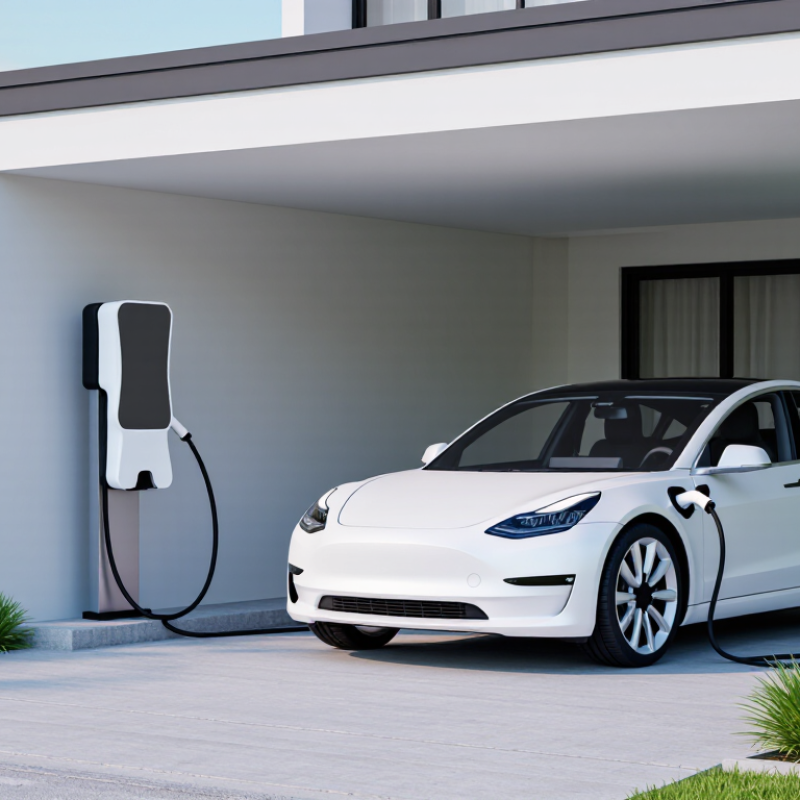
China Best Home Car Charging Station Supplier?

What Is a Home Car Charging Station and How Does It Work?

A home car charging station, often called electric vehicle supply equipment, safely connects a household electrical circuit to an electric vehicle. It does not usually convert household electricity into battery-ready direct current. Instead, it supplies controlled alternating current, and the vehicle’s onboard charger converts it for the battery. The station manages connection, current flow, and basic fault protection. Some units also support scheduled charging or energy monitoring.

The U.S. Department of Energy’s Alternative Fuels Data Center reports that Level 2 charging equipment typically adds about 10 to 20 miles of driving range per hour. Actual speed depends on the vehicle, charger, and circuit.

A typical home setup uses a dedicated 208- or 240-volt circuit, with a wall-mounted unit and cable reaching the parked vehicle. Before installation, an electrician should check the panel’s available capacity, wiring, and cable route. A charger’s advertised power is not the whole story. The car may accept less power, or the household circuit may limit output. Small details matter, like whether the cable reaches comfortably across the parking space on a cold evening.

The International Energy Agency’s Global EV Outlook 2024 counted more than four million public charging points worldwide at the end of 2023, but a home unit offers charging where a vehicle is parked overnight. It sounds simple. Yet every home has its quirks. A tidy installation plan can still miss one.

What Types of Home EV Chargers Are Made in China?

China Best Home Car Charging Station Supplier?

What Types of Home EV Chargers Are Made in China?

Chinese manufacturers produce several types of home EV chargers, mainly portable units and fixed wall-mounted AC chargers. Portable chargers connect to a suitable outlet and can be useful for travel or occasional charging. Wall-mounted models provide a more permanent setup, often with a cable holster and a compact control screen. Common power ratings include 7 kW and 11 kW, but the right option depends on the home’s electrical supply and the vehicle.

Some wall chargers include Wi-Fi or app controls for scheduling and energy tracking. Others keep things simple, with basic status lights and manual operation. Models may differ in connector type, cable length, weather protection, and electrical safety features. A specification sheet can look tidy, yet installation conditions matter just as much. The label alone is not enough.

Tips: Check the charger’s connector against your vehicle, and confirm available power with a qualified electrician. Ask about residual-current protection, enclosure rating, and warranty terms. A longer cable seems convenient, but it can create clutter beside a driveway. Small detail, real difference. Also compare independent test documents where available; product descriptions do not always explain how a unit performs in everyday use.

China Best Home Car Charging Station Supplier? - What Types of Home EV Chargers Are Made in China?
Home Charger Type Typical AC Output Common Configuration Charging Standard or Connector Typical Home Use Key Considerations
Portable Mode 2 charger About 1.8–3.7 kW Plugs into a suitable household outlet; an in-cable control and protection device is part of the charging cable. Connector and plug vary by vehicle and destination market; products may be made for GB/T or IEC-based markets. Occasional charging, travel, or homes where a fixed charging point is not available. Charging current is limited by the outlet and circuit. The outlet and wiring should be checked for continuous-load suitability.
Single-phase wall-mounted AC charger Commonly 3.5–7.4 kW Fixed installation on a dedicated circuit; often supplied with a tethered cable or a socket outlet. GB/T or Type 2 configurations are used for different vehicle and regional requirements. Everyday home charging, typically overnight. Actual charging power depends on the vehicle’s onboard AC charger, the available supply, and the installation.
Three-phase wall-mounted AC charger Commonly 11 or 22 kW Fixed installation connected to a compatible three-phase supply. GB/T or Type 2 configurations are available for different markets. Homes with three-phase service and vehicles that support higher-power AC charging. A three-phase supply and compatible vehicle are required to achieve the rated power; many homes or vehicles will charge below it.
Smart connected wallbox Typically 3.5–22 kW, depending on the electrical supply and model Fixed AC charger with features such as app control, scheduled charging, or remote monitoring. Connector standard is selected for the destination market and vehicle compatibility. Users who want to schedule charging or view charging status and energy use. Network features may use Wi-Fi, Bluetooth, Ethernet, or cellular connectivity; availability varies by model.
Load-managed home wallbox Rating varies; output can be adjusted to available household capacity. Uses current sensing or an energy meter to manage charging alongside other household loads. GB/T or Type 2 configurations may be offered, depending on the target market. Homes where the electrical service has limited spare capacity or where peak household loads vary. Correct setup may require compatible metering equipment and installation by a qualified electrician.
Solar-compatible home charger Rating varies by charger and available solar or grid power. Coordinates charging with a home energy system; some setups can prioritize surplus solar generation. Connector and communications compatibility depend on the charger, vehicle, and energy-management equipment. Homes with solar generation that want to use some available solar energy for vehicle charging. Solar charging performance depends on generation, household consumption, system controls, and vehicle charging limits.
Socket-outlet wallbox Rating depends on the charger, socket, circuit, and supply. Fixed charger with a vehicle-side cable plugged into an outlet on the unit. Commonly offered with regional outlet formats, including GB/T or Type 2 options where applicable. Homes that prefer to use a separate compatible charging cable rather than a permanently attached cable. Check that the vehicle cable, outlet, protective devices, and charger are compatible and appropriately rated.
General compatibility and safety checks Not a charger type Confirm rated voltage, current, phase, enclosure rating, protective functions, and installation requirements for the specific model. Match the connector and charging protocol to the vehicle and destination market; GB/T and IEC-based systems are not interchangeable without suitable equipment. Applicable to all home EV charger types. Specifications and approvals vary by product and sales region. Have a qualified electrician assess the home circuit and follow local electrical codes.

Which Features Matter When Comparing Chinese Charger Suppliers?

When comparing Chinese home car charging station suppliers, look beyond the quoted price. Check the charger’s rated output, connector options, cable length, and compatibility with your vehicle and home electrical setup. A six-metre cable may reach a driveway more easily than a shorter one, but it can also need more careful storage. Small details matter.

Ask for clear technical documents, test reports, warranty terms, and instructions for installation and maintenance. Confirm which safety protections the unit includes, such as overcurrent and temperature monitoring, and whether they suit your intended use. Request sample records from production checks, not just a polished product brochure. Evidence is useful.

Supplier communication is another practical test. Send a specific question about firmware updates, replacement parts, or troubleshooting, then assess how clearly and promptly the team responds. Ask how support works after delivery and who handles technical issues in your region. If possible, inspect a sample unit and review its casing, cable strain relief, display, and app setup. A tidy demo is not the same as years of reliable use, though. Compare total costs, including shipping, installation guidance, and spare parts, rather than choosing on price alone.

How Can Buyers Assess a Supplier’s Quality and Certifications?

A home charging station should be judged by verified performance, not polished product photos. The International Energy Agency’s Global EV Outlook 2024 reports that public charging points grew by more than 40% in 2023, reaching about 3.5 million worldwide. That expansion makes dependable charging hardware increasingly important, even though public-charger growth is not a direct measure of home charger demand.

Ask for certificates and test reports that match the exact model, plug, and electrical configuration being offered. For AC equipment, check whether testing covers relevant IEC 61851-1 safety requirements and IEC 62196 connector requirements. Confirm the issuing body and whether its testing laboratory is accredited, such as to ISO/IEC 17025. Look closely. A certificate for a similar model may not cover the unit you will receive.

Request evidence for insulation, temperature rise, leakage protection, enclosure rating, and cable durability. Then compare the report’s model number, ratings, and test date against the product label and quotation. Requirements differ by destination market, so confirm local approvals before ordering. I would not treat a tidy PDF as proof on its own; checking every document takes time, and buyers can still miss small mismatches. Ask the supplier to clarify them in writing.

What Should You Consider Before Purchasing and Installing a Home Charger?

Before purchasing a home charger, match its output to your vehicle and daily driving. The U.S. Department of Energy’s Alternative Fuels Data Center says Level 2 equipment typically adds about 10–20 miles of range per charging hour. Actual speed varies with the vehicle, battery, and conditions. Start with the vehicle. Check its connector, maximum AC charging rate, and recommended charging setup before comparing suppliers.

Have an electrician assess your panel capacity, wiring route, and parking distance. A charger that looks suitable may need costly electrical upgrades. Measure the cable path, including the distance around doors or obstacles. Check for recognized safety certification, outdoor protection if needed, warranty terms, and access to replacement parts. For suppliers in China, request clear test documentation and installation instructions, and confirm how technical support works after delivery. Details matter.

The International Energy Agency’s Global EV Outlook 2024 reported that public charging points worldwide grew by more than 40% in 2023, reaching about 3.9 million. That growth reflects expanding EV infrastructure, but it does not determine the right home unit for your household. Consider overnight charging habits and future vehicle needs. Smart scheduling can help, though it is not essential for every home. I would not buy extra power blindly. A site inspection can expose assumptions that product specifications cannot.

MSIRobot