
Who Are the Best Digital Display Signage Suppliers in China?
Digital Display Signage has become a practical tool for retailers, transport hubs, schools, and corporate spaces across China. Buyers can choose from LED walls, LCD video walls, kiosk screens, and interactive displays. The challenge is not finding a supplier. It is finding one that can deliver consistent image quality, stable hardware, and dependable support after installation.
This guide explores how to assess leading Chinese suppliers, rather than treating “best” as a single universal label. A reliable evaluation should consider product range, brightness, pixel pitch, panel uniformity, operating temperature, certifications, production capacity, and warranty terms. Ask for recent project photos, sample test reports, and a clear service plan. Details matter. A screen in a sunlit shop window needs different brightness from a display in a quiet meeting room. Supplier websites can look polished, but claims deserve verification. That point is easy to overlook.
We will also examine communication, customization, lead times, software compatibility, and spare-parts availability. These factors often shape the ownership experience more than a low quotation does. No shortlist can replace a factory audit or a hands-on sample review, and even careful research has limits. Still, comparing suppliers with the same questions can reduce surprises and reveal which partners are prepared for long-term projects. The aim is practical guidance for making a better-informed choice.
What Is Digital Display Signage and How Is It Used?
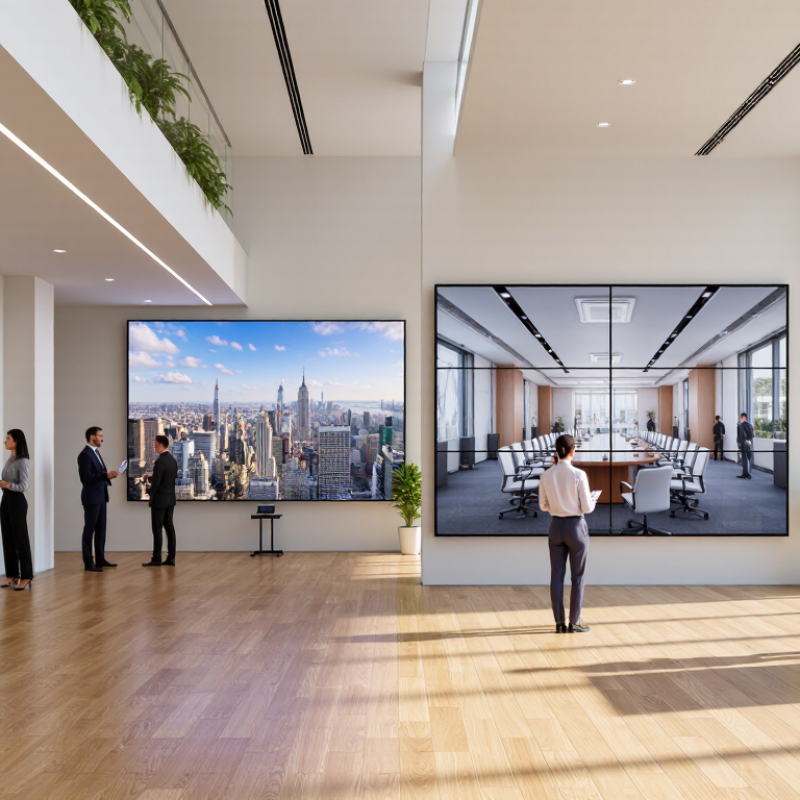
Digital display signage is a networked screen system that presents changing visual content, such as announcements, directions, prices, or video. Screens may use LCD or LED technology, while software lets staff schedule and update messages remotely or on-site. A grocery store might show a breakfast offer near its entrance, then switch to evening promotions. In a station, the same basic system can display platform changes and service alerts. Small details matter. Screen brightness, viewing distance, glare, and text size affect whether people can read a message in a few seconds.
The market is expanding, though forecasts are not proof that every installation pays off. Grand View Research valued the global digital signage market at USD 25.3 billion in 2022 and projected an 8.1% compound annual growth rate from 2023 to 2030. MarketsandMarkets estimated USD 25.2 billion in 2023, forecasting USD 35.94 billion by 2028. Their figures differ because report methods and market definitions can vary. That is worth noting. Common uses include retail promotions, wayfinding in hospitals, menus in restaurants, and live updates in transport hubs. A poorly placed screen can still be ignored, or create visual clutter; content planning and maintenance matter as much as the display itself.
Who Are the Best Digital Display Signage Suppliers in China? - What Is Digital Display Signage and How Is It Used?
| Supplier type | Typical products | What digital display signage is | Common uses | What to verify when selecting a supplier |
|---|---|---|---|---|
| LED display manufacturer | Indoor and outdoor LED video walls, modular panels, and LED control systems | A screen made from light-emitting diodes that presents changing images, video, or text. | Outdoor advertising, stadiums, events, retail façades, and large indoor video walls | Pixel pitch, viewing distance, brightness, refresh rate, cabinet design, installation support, and spare-parts availability |
| LCD commercial-display manufacturer | Digital signage screens, video-wall displays, and high-brightness LCD panels | A flat-panel display that uses liquid-crystal technology and a backlight to show digital content. | Retail menus, reception areas, transport information, meeting rooms, and indoor wayfinding | Screen size, resolution, operating hours, brightness, orientation support, connectivity, and warranty terms |
| Interactive-display supplier | Touchscreen kiosks, interactive tables, and self-service terminals | Digital signage with a touch interface or other input method that lets users interact with the displayed content. | Self-service check-in, product directories, ticketing, product demonstrations, and public information | Touch technology, software compatibility, accessibility, enclosure durability, payment or peripheral integration, and security updates |
| Digital-signage system integrator | Displays combined with media players, content-management software, mounts, and installation services | A complete system for scheduling, distributing, and displaying digital content across one or more screens. | Multi-site retail networks, corporate communications, hospitality, and transport signage | Software licensing, remote device management, network requirements, installation scope, service response, and system interoperability |
| OEM/ODM signage supplier | Custom display enclosures, kiosks, branded hardware, and project-specific configurations | Digital signage hardware designed or manufactured to meet a buyer’s specified product or project requirements. | Custom retail fixtures, purpose-built kiosks, and deployments with defined hardware specifications | Engineering capability, sample approval, customization limits, production quality controls, certifications for the destination market, and lead times |
| How to compare suppliers | Request a specification sheet, itemized quotation, warranty, and relevant project references | Digital signage includes the display hardware and, depending on the project, content playback, management software, mounting, and connectivity. | Match the screen technology to the environment, audience viewing distance, content, and operating schedule. | Compare equivalent specifications and confirm compliance, shipping terms, installation responsibilities, after-sales support, and total cost of ownership. |