Choosing the Best Commercial Drain Cleaning Machine Supplier in China starts with the work the machine must do. A restaurant kitchen may need to clear grease from a busy branch line. A maintenance crew may face roots, compacted debris, or long runs of pipe. These jobs call for different cable diameters, cutter heads, reach, and drive systems. A machine that looks powerful in a catalog can still be awkward beside a floor drain or difficult to service after a long shift.
Plumbing and heating expert Richard Trethewey is a relevant voice for practical plumbing decisions. However, no source material was provided to verify a direct quotation from him, so attributing invented words would be misleading. The useful principle here is simple: match the equipment to the pipe, blockage, and operator. Ask suppliers for clear specifications, operating guidance, spare-part access, and evidence from comparable applications. Check details that are easy to overlook, such as cable replacement, foot-switch response, and whether the frame rolls smoothly across a wet workshop floor. Small things matter.
This guide examines supplier capability alongside machine performance, quality control, customization, and after-sales support. Product claims deserve careful checking. A neat product photo cannot show how a cable behaves under load, or how quickly a worn part can be replaced. Some comparisons may remain imperfect; supplier data is not always presented in the same way. That is worth acknowledging, not hiding. The aim is to help buyers ask sharper questions and choose a Commercial Drain Cleaning Machine supplier with realistic expectations.
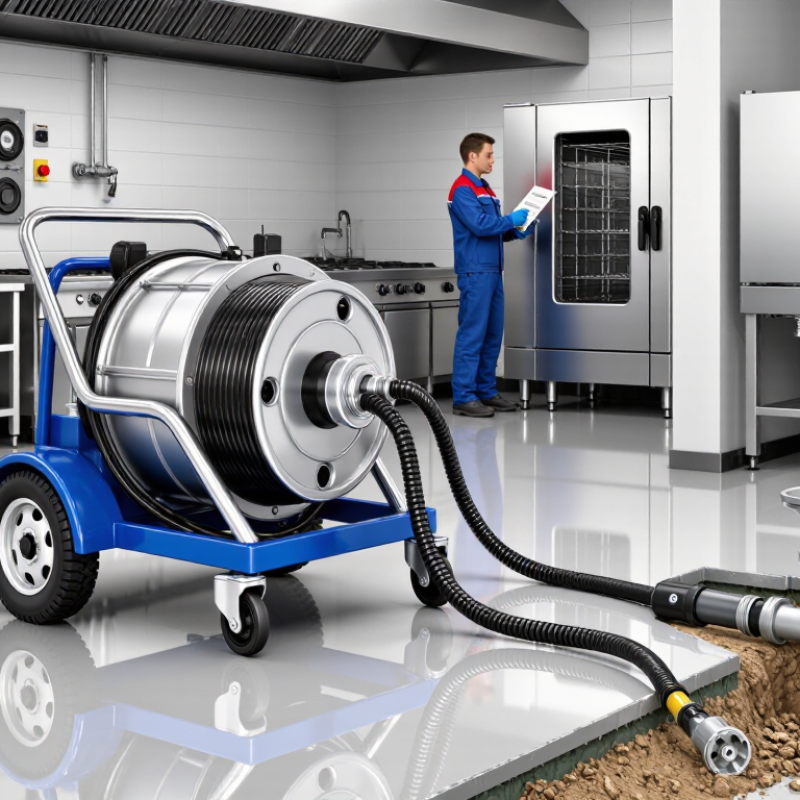
A commercial drain cleaning machine removes obstructions from building drains and sewer lines using a rotating cable, chain, or water jet. It is built for repeated work in restaurants, hotels, workshops, and municipal maintenance settings. The need for upkeep is substantial: the U.S. Environmental Protection Agency’s 2022 Clean Watersheds Needs Survey estimated $630.1 billion in wastewater and stormwater infrastructure needs over 20 years. The American Society of Civil Engineers’ 2021 Report Card rated U.S. wastewater infrastructure D+. These figures describe infrastructure needs, not machine sales, but they help explain why dependable maintenance equipment matters.
Common components include an electric or petrol motor, a cable drum, a flexible cable, cutting heads, and a feed-control system. Some models also use a water tank, high-pressure pump, and hose. In a kitchen drain, grease may cling to the pipe wall; a suitable cutter can break it apart while the cable advances through the line.
Jetting machines use water flow to flush loosened debris. Not a magic fix. Operators must match cable diameter and cutter size to pipe material and blockage type.
For suppliers in China, clear specifications matter more than impressive claims. Buyers should check working range, cable construction, motor protection, spare-part availability, and safety controls. A larger cutter can harm a fragile pipe, while an undersized cable may twist under load. Even experienced crews can misread resistance, so inspection access and operator training remain essential. The machine helps, but judgment still does the work.
Best Commercial Drain Cleaning Machine Supplier in China
Machine Types by Cable Diameter: Common 1/4-, 3/8-, and 1/2-Inch Options
Cable diameter affects flexibility, reach, and the size of blockage a machine can handle. A 1/4-inch cable bends easily through tight traps and smaller indoor lines. It suits light maintenance, but may lack the stiffness needed for dense obstructions.
Small cable, limited force.
A 3/8-inch cable is a practical middle option for many service jobs. It can navigate moderate bends while offering more working strength than a 1/4-inch cable. For larger drains and tougher deposits, a 1/2-inch cable may provide better support. It also needs a machine built to feed and control that cable safely.
Bigger is not always better.
When comparing commercial machines from a supplier in China, check the approved cable range, usable length, drum capacity, and compatible cutting heads. Ask how the machine handles tight elbows and whether replacement cables are readily available. Pipe condition matters too: an aggressive head or oversized cable can damage a fragile line.
Diameter alone cannot predict performance.
I have seen buyers focus on motor power and overlook cable flexibility; that choice can make routine work frustrating. A clear specification sheet helps, though real jobs rarely match a neat table.
When comparing a commercial drain cleaning machine supplier in China, look beyond headline specifications. Cable length determines how far an operator can reach, but extra length is not always better. In a pipe with several tight bends, a long cable may lose pushing control. Measure the typical pipe run and note its diameter and bends. Measure before ordering.
Motor power matters, yet the wattage alone cannot predict cleaning performance. Ask for the motor’s rated output, speed range, and duty cycle, plus details about overload protection. A machine used throughout a busy shift needs to manage heat and repeated starts. If possible, request test records for the intended cable and cutter combination. I would not judge torque from a power figure alone.
Cleaning capacity depends on the blockage, pipe size, cable flexibility, and compatible cleaning heads. Grease, roots, and compacted debris may require different tools and operating speeds. Ask the supplier what pipe diameters the machine is designed to service, and whether replacement cables and heads are readily available. A short demonstration using a representative pipe setup can reveal feed control and cable vibration. Specifications help, but a realistic test may expose details the brochure misses.
Best Commercial Drain Cleaning Machine Supplier in China
Safety and Quality Benchmarks: ISO 12100 and ISO 9001:2015
Choosing a commercial drain cleaning machine supplier in China takes more than comparing prices. ISO 12100:2010 provides a framework for identifying machinery hazards and reducing risks through design. For a drain cleaner, check whether the assessment addresses rotating cables, exposed pinch points, electrical protection, and safe cable feeding. Ask for the risk assessment and operating instructions, not just a certificate. Paperwork alone cannot show how a machine behaves under load.
ISO 9001:2015 focuses on a supplier’s quality management system, including controlled processes and corrective action. The ISO Survey 2022 recorded more than 1.2 million valid ISO 9001 certificates worldwide. That figure shows broad adoption, but it does not prove a particular machine’s performance. Ask for the certificate’s scope, issuing body, and current validity. Then review inspection records, traceability for key components, and documented tests on finished units. A practical check: watch a cable drum run and stop.
Tips: Request a sample inspection report and confirm that safety features match the exact model. No system catches everything. Even experienced buyers can overlook small details, such as a hard-to-reach emergency stop or unclear maintenance instructions. Good suppliers should welcome specific questions and explain any limits openly.
ISO 12100:2010 provides principles for machinery risk assessment and risk reduction. ISO 9001:2015 specifies quality management system requirements. The chart shows edition years only—not supplier scores, product certification, or proof of compliance. Evaluate suppliers using relevant documentation and audit evidence.
A reliable commercial drain cleaning machine supplier should welcome practical testing, not just send a polished video. Ask for a live demonstration using pipe sections with different diameters and bends. Watch how the cable feeds, reverses, and handles a realistic blockage. Note vibration, unusual noise, water exposure, and how quickly an operator can clear and reload the cable. Small details matter. A stiff foot pedal or awkward drum latch can slow a crew during a busy call.
Request test records, component specifications, and clear instructions for routine maintenance. Check that electrical and safety documents match the machine configuration and the requirements of your destination market. Confirm serial-number traceability and ask how replacement parts are identified. Paperwork alone is not proof of quality, though; compare it with the machine you inspect. One test may also miss problems that appear after repeated use, so ask about endurance testing and how results are recorded. There is no perfect checklist.
After-sales support deserves the same scrutiny. Ask who handles technical questions, what information they need for diagnosis, and how parts are shipped. Agree on response times and warranty terms in writing. A supplier’s answers should be specific, not vague promises. If a detail remains unclear, pause and ask again. That can feel inconvenient, but it is cheaper than discovering a support gap after the machine reaches your workshop.
| Evaluation Area | What to Check | Evidence to Request | How to Verify | Assessment Guide |
|---|---|---|---|---|
| Machine suitability | Confirm that the machine type, cable or jetting system, working range, and intended pipe applications match the jobs you perform. | Product specifications, operating manual, rated voltage and frequency, compatible accessories, and stated application limits. | Compare the specifications with your pipe sizes, typical blockages, work environment, and local power supply. Ask for clarification where performance limits are not stated. | Pass: Requirements are documented and compatible. Review: Important limits or specifications are missing. |
| Functional and safety testing | Check normal operation, controls, protective features, and the condition of the supplied accessories. | Test procedure, inspection checklist, test records for the unit being purchased, and clear operating and safety instructions. | Request a live demonstration or recorded test of the actual model. Confirm that the machine starts, operates, and stops correctly and that guards and safety devices are present where applicable. | Pass: Demonstrated functions match the manual and order specification. Review: Testing is limited to a general product presentation. |
| Performance claims | Evaluate stated working capacity, such as cable length and diameter, rotation or feed functions, or pump pressure and flow for jetting equipment. | Model-specific technical data and the test conditions used to support performance claims. | Check units, rated operating conditions, and whether figures apply to the exact configuration being quoted. Do not compare figures obtained under different test conditions as if they were equivalent. | Pass: Claims are specific, measurable, and tied to the quoted configuration. Review: Claims are unsupported or omit test conditions. |
| Electrical and product compliance | Determine which product safety, electrical, and other regulatory requirements apply in the destination market. | Applicable declarations, test reports, labels, and technical documentation for the exact model and configuration. | Check requirements with the relevant destination-market regulator or a qualified conformity-assessment professional. Verify that documents identify the product covered and are valid for the intended market. | Pass: Applicable requirements and supporting documents are verified. Review: A generic certificate is offered without a clear connection to the product or market. |
| Quality control and traceability | Review how incoming parts, assembly, final inspection, and product identification are controlled. | Quality-control process description, inspection records, serial or batch identification details, and procedures for handling defects. | Ask how a unit can be traced to its production or inspection records and how nonconforming products are handled. If appropriate, arrange an independent pre-shipment inspection. | Pass: Inspection and traceability processes are documented. Review: No unit-level or batch-level inspection evidence is available. |
| Spare parts and consumables | Check availability of wear items and replacement parts, including cables, cutters, nozzles, hoses, seals, and other model-specific components. | Parts list with part numbers, recommended consumables, current prices, and availability or lead-time information. | Confirm that the parts fit the exact model and can be ordered separately. Identify commonly replaced items before placing the order. | Pass: Parts are identifiable and ordering terms are clear. Review: Parts are described only by general names or availability is uncertain. |
| Warranty and service support | Understand warranty duration, coverage, exclusions, claim process, and responsibility for shipping or labor costs. | Written warranty terms, service contact details, troubleshooting guidance, and the procedure for requesting repairs or replacement parts. | Read the terms before purchase and ask for written clarification of ambiguous exclusions, response arrangements, and repair responsibilities. | Pass: Coverage and claim steps are written and specific. Review: Key terms depend on verbal assurances. |
| Supplier communication and order control | Assess whether the supplier provides consistent technical answers and clearly confirms the ordered configuration. | Quotation, approved specification, packing list, delivery schedule, and written confirmation of accessories and customization. | Compare the quotation, order confirmation, and final product documentation. Resolve discrepancies before production or shipment. | Pass: Product details and delivery terms are consistent in writing. Review: Specifications change between documents. |
MSIRobot