A Bubble Pendant Lamp can soften a room without disappearing into it. Its rounded glass catches daylight, then turns warm and luminous above a dining table or kitchen island. Scale matters. A cluster can feel sculptural; one small globe may look lost beneath a high ceiling. The best choice depends on room size, ceiling height, finish, and the quality of light—not appearance alone.
Lighting also has a practical side. The International Energy Agency has reported that lighting represents about 15% of global electricity consumption. The U.S. Department of Energy says LED bulbs use up to 90% less energy than incandescent bulbs. These figures describe lighting broadly, not bubble pendants specifically, but they make bulb compatibility worth checking. George Nelson, the designer behind the Nelson Bubble Lamp series, wrote, “Design is a response to social change.” A useful thought. Yet good design still needs good proportions.
This guide compares seven bubble pendant lamps for modern homes, from understated single globes to more expressive multi-light designs. It considers materials, dimensions, light direction, installation needs, and value, so readers can judge more than a product photo. Small details matter. A clear globe may show dust more readily, while a frosted finish can soften glare. No ranking can account for every ceiling or personal taste. That is worth remembering. The right lamp should suit the room you actually live in, not just the room in a styled photograph.
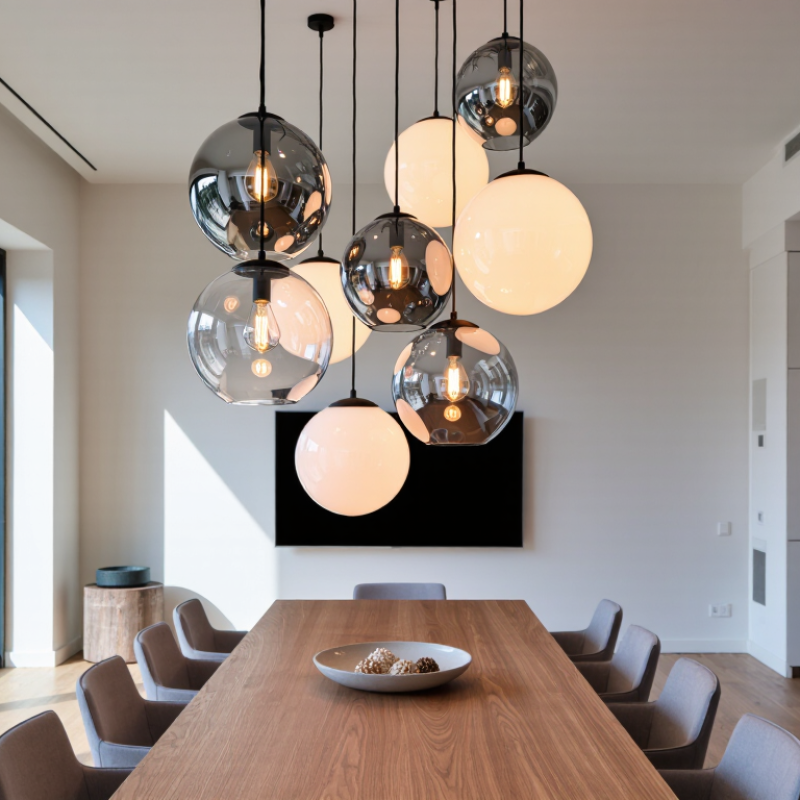
Abubble pendant lamp is defined by its rounded glass shades, which resemble clear or softly tinted bubbles. The globes may hang in a neat row, cluster at different heights, or surround a central stem. Their shape is more than decoration: curved glass softens the outline of a bulb and spreads light across nearby surfaces. The effect depends on the glass. Clear shades show the lamp inside, while frosted glass creates a gentler glow.
Size and placement shape how the fixture feels in a room. A single globe can suit a small reading nook; a multi-globe pendant can anchor a dining table or kitchen island. Not every cluster is balanced, though. Check the fixture’s width against the furniture below it, and allow enough headroom for people to pass comfortably.
The bulb type also matters. Exposed bulbs can create glare at eye level, so dimmable bulbs or frosted finishes may be more comfortable.
Worth checking.
Glass collects dust and fingerprints, especially near cooking areas, and some globes are awkward to remove for cleaning. Before choosing a design, look at how its shades attach and whether replacement bulbs fit inside them. A beautiful silhouette can still be inconvenient.
Bubble pendants pair rounded glass shades with clean, open forms, bringing softness to modern rooms without adding visual bulk. Above a dining table, several clear globes can create a gentle focal point while keeping sightlines open. In a compact kitchen, one pendant can define an island without making the ceiling feel crowded. The effect depends on scale. Oversized globes may overwhelm a narrow room, while very small shades can disappear above a long table. I’ve found that the reflection on glass can also feel busier than expected near patterned walls.
Light quality matters as much as shape. The U.S. Department of Energy’s Energy Saver guidance reports that LEDs use at least 75% less energy and last up to 25 times longer than incandescent bulbs. Choosing a compatible, warm-white LED can make clear glass feel inviting rather than stark. Dimming helps, too. Still, glass shows dust and fingerprints, so upkeep is easy to underestimate.
Tips: Hang pendants where they illuminate a task without blocking eye contact. For a dining surface, test the fixture height with a temporary paper mock-up before installation. Check the bulb’s color temperature and dimmer compatibility, then view the light at night—not only in a bright showroom.
Bubble pendant lamps differ most clearly through their shells and silhouettes. Blown glass gives each globe subtle variations, while molded glass usually looks more uniform. Clear glass reveals the bulb and casts sharper reflections across a ceiling. Opal glass softens the light and hides the bulb, though it can make a small fixture feel visually heavier. Acrylic is lighter and less fragile, but its surface may scratch. Metal details, such as a narrow brass-colored collar, add contrast without changing the rounded form. Not every room agrees.
Shape affects both mood and placement. A single globe suits a compact breakfast nook; staggered bubbles create a wider, more sculptural presence above a long table. Grouping several spheres can look airy, but tightly packed globes may feel crowded. Check the fixture’s diameter against the table, and leave clear sightlines across the room. For efficient illumination, use compatible LED bulbs. The U.S. Department of Energy’s Energy Saver guidance reports that LEDs use at least 75% less energy and last up to 25 times longer than incandescent bulbs. That comparison is useful, though bulb choice alone cannot fix harsh glare. A dimmer and opal shade can help; sometimes the softer result is worth a little less sparkle.
| Style | Typical Materials | Bubble Shape and Arrangement | Light and Visual Effect | Suitable Placement | What to Consider |
|---|---|---|---|---|---|
| 1. Clear Glass Globe | Blown or molded transparent glass; metal socket and suspension hardware | One smooth spherical shade, usually with a visible bulb | Clear glass preserves a light, open look and allows the bulb to remain prominent. | Small dining areas, bedside lighting, kitchen islands, or grouped in a row | Choose a decorative bulb and check glare; a clear shade does not conceal the light source. |
| 2. Opal Glass Globe | Opal or frosted glass with metal hardware | Single rounded globe with an opaque, softly diffusing surface | Diffused glass obscures the bulb and spreads light more evenly than clear glass. | Bedrooms, living rooms, hallways, and dining spaces | Light output depends on the bulb and shade size; confirm the lamp provides enough illumination for the room. |
| 3. Clustered Glass Bubbles | Clear, tinted, or opal glass spheres; metal canopy and branches | Several globes arranged at different heights around a central fitting | Creates a sculptural focal point; multiple bulbs can spread light across a wider area. | Stairwells, double-height spaces, entryways, and large dining rooms | Measure the drop and cluster diameter carefully, especially above walkways and tables. |
| 4. Single-Tier Bubble Chandelier | Glass globes with a metal frame or arms | Bubbles distributed in a broad horizontal ring or compact circular group | Balances a central focal shape with a relatively low profile. | Dining tables, living rooms, and rooms with standard ceiling heights | Check that the fixture is wide enough for the area without obstructing sightlines. |
| 5. Multi-Tier Bubble Pendant | Glass spheres, metal frame, and multiple suspension points | Layers of bubbles stacked vertically in a tiered composition | Emphasizes height and creates a more dramatic, chandelier-like appearance. | High ceilings, stair landings, and spacious foyers | Requires sufficient vertical clearance; confirm the total hanging height before installation. |
| 6. Hand-Blown or Textured Glass Bubble | Hand-blown glass, often with subtle irregularities, ripples, or seeded texture | Rounded globe with a less uniform surface than standard clear glass | Surface texture can add visual interest and soften the appearance of the light. | Reading nooks, accent areas, and rooms with natural or handcrafted finishes | Handmade glass may vary slightly in size, thickness, and surface pattern. |
| 7. Bubble-and-Metal Accent Pendant | Glass globe paired with a visible metal stem, cage, collar, or frame | One bubble-shaped shade set within or beside a simple geometric metal detail | Combines a rounded glass form with a more structured, linear accent. | Kitchen islands, breakfast counters, and modern or industrial-inspired interiors | Match the metal finish to nearby hardware, and check whether the frame affects bulb access or cleaning. |
Bubble pendant lamps soften modern interiors with rounded glass and gentle, scattered light. A clear single-globe pendant suits a small breakfast nook, where daylight can pass through its transparent shade. An opal-glass bubble gives a calmer glow above a bedside table or reading chair. It hides the bulb, though the room may feel dimmer than expected. A clustered arrangement combines several bubbles at different heights. It works well over a stair landing, but check ceiling clearance before choosing one.
A linear bubble pendant places several globes along a shared bar. Over a kitchen island, it spreads light across the worktop more evenly than one central globe. An asymmetrical cluster feels more relaxed and sculptural. Its uneven outline can bring character to a plain dining area, though matching it with busy wall décor may feel like too much. Keep nearby finishes simple.
Smoked-glass bubbles add contrast without a solid, heavy shade. They can suit a room with pale walls, but darker glass may reduce useful task light. A metal-accent bubble pairs rounded glass with a visible stem or socket. Choose a finish that relates to nearby cabinet handles or taps. Small details matter. One choice deserves another look: decorative shapes are attractive, yet bulb brightness and shade size still affect everyday comfort. Check both before placing the pendant over a desk or dining table.
Choosing the right bubble pendant starts with the room’s size and purpose. In a small dining nook, one compact fixture can feel balanced without crowding the table. Above a kitchen island, a pair or trio can spread light more evenly. Measure the surface and ceiling before choosing; a large glass globe may look elegant in a showroom but overwhelm a low ceiling at home. Leave enough clearance for people to move comfortably beneath it.
Tips: Tape a paper circle to the ceiling to preview the fixture’s footprint. Check whether the pendant accepts dimming, and confirm bulb type and brightness before buying. A warm light can soften a dining area, while brighter task lighting may suit food preparation.
In bedrooms and living rooms, consider how the pendant looks from the bed or sofa, not just from the doorway. Clear glass can reveal the bulb, so choose a comfortable brightness and avoid glare in the usual seating position. Multiple globes create a lively focal point, but their reflections can become busy against patterned walls. It is easy to misjudge scale from product photos; a quick room sketch helps, though it will not capture every detail.
MSIRobot