
10 Best Aluminum Profiles Suppliers for Global Buyers
Choosing an Aluminum Profiles supplier is rarely just a price comparison. Buyers must consider alloy options, dimensional tolerances, surface finishes, production capacity, and delivery reliability. A profile that looks suitable in a catalog may not fit an assembly without further machining. Small differences matter.
This guide introduces 10 suppliers serving buyers across international markets. It highlights practical factors such as product range, customization, quality documentation, and export experience. These details can help purchasing teams prepare better questions before requesting quotations. Still, supplier claims deserve careful review. No list can replace sample testing, technical discussions, and checks on current lead times.
A dependable partner should explain its capabilities clearly and respond with specific information. Ask about minimum order quantities, packaging for long-distance transport, and how dimensional inspections are performed. Request drawings or samples when tolerances are critical. Simple, but important. Some buyers may value fast prototyping; others need consistent batches for ongoing construction or manufacturing projects. The best fit depends on the application, not a single ranking. This overview offers a starting point, while recognizing that publicly available information may be incomplete or change over time. Verify specifications directly before making a purchasing decision.
What Aluminum Profiles Are and Why Global Buyers Source Them
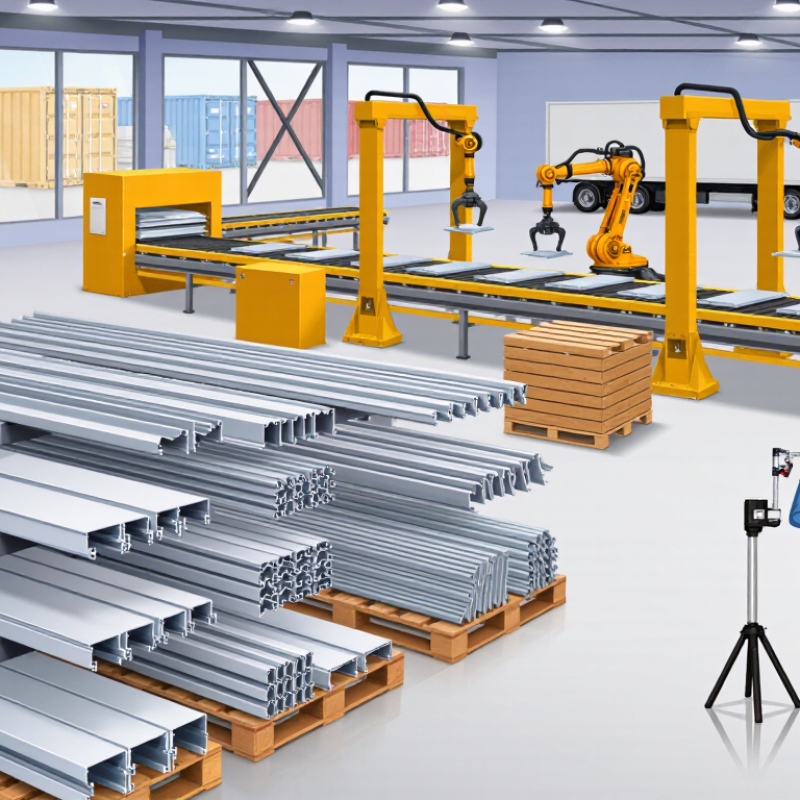
Aluminum profiles are shaped sections produced by pushing heated alloy through a die. Their cross-sections can form window frames, machine rails, curtain-wall supports, or heat sinks. A small change in wall thickness can affect weight, stiffness, and machining time. Details matter. Alloy and temper also influence strength, finish, and how reliably a profile can be cut or drilled.
Global buyers source profiles because extrusion can create complex shapes in repeatable lengths, reducing the need to assemble many separate parts. The USGS Mineral Commodity Summaries 2024 estimated global primary aluminum production at about 70 million metric tons in 2023. That figure describes raw metal, not finished profiles, but it reflects the scale of the material supply base. Buyers can compare suppliers on tooling capability, production capacity, dimensional control, and shipping options. Still, a large industry does not guarantee a suitable section or consistent batches.
Profiles are lightweight and generally resist corrosion, making them useful in buildings, transport equipment, and industrial systems. Performance depends on alloy, surface treatment, and exposure conditions; “aluminum” alone is not a complete specification. Ask for alloy and temper details, tolerances, finish requirements, inspection records, and protective packing. A neat drawing can hide a poor fit. Sample checks help, though they cannot prove every production run will match.