Icon about-block-ico-1 Icon about-block-ico-2 Icon about-block-ico-3 Icon about-block-ico-4 Icon announcement-close Icon arrow-left Icon arrow-right Icon arrow-sm Icon asterisk Icon banner-transparent-vector Icon btn-callback-ico Icon careers-item-location Icon careers-item-time Icon careers-item-type Icon careers-mail-ico Icon careers-phone-ico Icon careers-search-ico Icon careers-single-hero-vector Icon careers-single-more-vector Icon careers-vector Icon check Icon close Icon dfm-image-left-vector Icon dfm-image-right-vector Icon document Icon download-popup-vector Icon dropdown Icon envelope Icon facebook Icon faq-banner-bg Icon faq-title-ico-active Icon faq-title-ico Icon featured-links-block-bg Icon figure-1 Icon figure-10 Icon figure-11 Icon figure-12 Icon figure-13 Icon figure-14 Icon figure-15 Icon figure-2 Icon figure-3 Icon figure-4 Icon figure-5 Icon figure-6 Icon figure-7 Icon figure-8 Icon figure-9 Icon file-upload Icon form-sidebar-back Icon form-step-done Icon gmap-marker-group-icon Icon gmap-marker-icon Icon header-profile-ico Icon instagram Icon link Icon linkedin Icon loader Icon mail Icon phone Icon play-yt Icon play Icon post-nav-arr-left Icon quote-banner-vector Icon quote-block-aside-vector Icon quote-contact-phone-ico Icon quote-contact-position-ico Icon sidebar-location Icon sidebar-phone Icon technology-banner-nav-left-vector Icon technology-banner-nav-right-vector Icon twitter Icon webinar-item-date-vector Icon whitepaper-img-ico-left Icon whitepaper-img-ico-right Icon whitepapers-listing-banner-ico Icon whitepapers-single-aside-vector Icon youtube Icon yt-play-button

7 Best Tungsten Carbide Ceramic Suppliers in 2026

Tungsten Carbide Ceramic is moving from a specialist material into a strategic engineering choice. Its hardness, heat resistance, and wear performance support mining tools, cutting inserts, seals, nozzles, and advanced industrial coatings. The USGS Mineral Commodity Summaries 2025 reported global tungsten mine production at approximately 81,000 metric tons in 2024. China supplied the largest share. The European Commission also identifies tungsten as a critical raw material, highlighting supply-chain risk and industrial importance.

This guide examines seven Tungsten Carbide Ceramic suppliers for 2026. The selection considers powder purity, binder control, dimensional consistency, coating technology, quality certification, lead times, and technical support. These details matter. A polished product page cannot reveal poor grain distribution or unstable sintering. Dr. Vladimir K. Sikka, a recognized powder-metallurgy researcher, described tungsten carbide as “one of the hardest materials known.” That strength is valuable, but it is not the whole story. Fracture toughness, cobalt content, porosity, surface finish, and application temperature can change real-world performance.

The market is not perfectly transparent. Some supplier claims remain difficult to compare. Independent testing is still essential. Buyers should request grade data, density results, hardness measurements, and wear-test conditions before committing to volume orders. Even impressive specifications may fail in abrasive slurry, thermal cycling, or high-impact service. This review therefore focuses on evidence, not promises. It also acknowledges an uncomfortable point: the cheapest supplier may create the highest total cost when premature wear stops production.
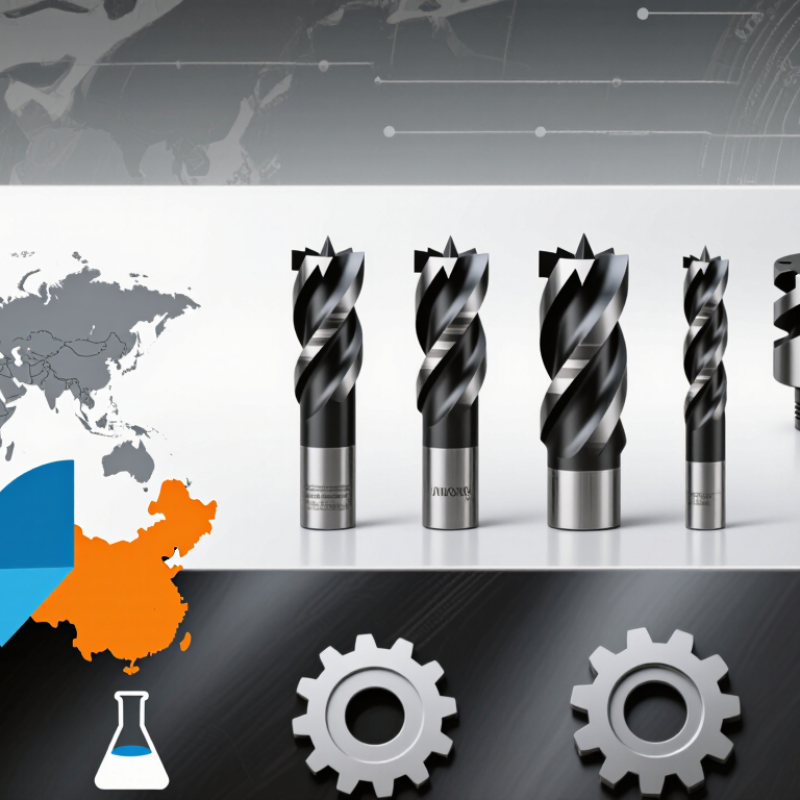
7 Best Tungsten Carbide Ceramic Suppliers in 2026

Tungsten Carbide Benchmarks: 1,600–2,200 HV Hardness and 14.5–15.2 g/cm³ Density

Choosing among the 7 best tungsten carbide ceramic suppliers in 2026 requires more than comparing catalog prices. Tungsten carbide is often called a ceramic, although many commercial grades are cemented hardmetals with metallic binders. The practical benchmark is 1,600–2,200 HV hardness and 14.5–15.2 g/cm³ density.

These figures need careful testing. ISO 6507-1 specifies the Vickers hardness method, but test load, surface finish, binder content, and porosity can change results. A supplier reporting 2,200 HV should also disclose the grade, indentation load, and sampling method. Otherwise, the number is incomplete. ASM Handbook data for powder metallurgy shows that density and hardness commonly move in opposite directions as binder content changes. Higher binder levels may improve toughness while reducing hardness.

Look for lot-specific certificates, not broad website ranges. The certificate should identify density, hardness, carbide grain size, cobalt or nickel binder percentage, and dimensional tolerances. Independent laboratory verification is useful for demanding wear parts. The 2025 USGS Mineral Commodity Summaries reported approximately 81,000 metric tons of tungsten mine production worldwide in 2024, highlighting the importance of traceable raw-material sourcing. Supply stability matters. So does process discipline. Some suppliers publish impressive peak values, but production averages can be lower. That gap deserves questioning.-vesm

7 Best Tungsten Carbide Ceramic Suppliers in 2026 - Tungsten Carbide Benchmarks: 1,600–2,200 HV Hardness and 14.5–15.2 g/cm³ Density
Supplier Profile Recommended Material Grade Typical WC Grain Size Nominal Cobalt Binder Hardness, HV30 Density, g/cm³ Typical Product Forms Key Applications Quality and Documentation Typical Customization Capability
Profile 1 — Precision Micro-Grain Specialist Fine-grain WC–Co, approximately 6% Co 0.4–0.8 μm 5.5–6.5 wt% 2,000–2,200 HV30 14.7–15.0 Rods Blanks Small inserts Micro-drills, end mills, precision wear parts and high-speed cutting tools Material certificate, density report, hardness report and dimensional inspection record Close-tolerance grinding, centerless grinding and custom diameters
Profile 2 — General Cutting-Tool Supplier Medium-grain WC–Co, approximately 10% Co 0.8–1.3 μm 9–11 wt% 1,700–1,950 HV30 14.2–14.6 Round bars Preforms Saw tips General machining, woodworking tools, wear-resistant tooling and mining components Batch traceability, chemical composition data and inspection sampling plan Standard grades, brazed-tool blanks and non-standard lengths
Profile 3 — Heavy-Duty Wear-Parts Specialist Coarse-grain WC–Co, approximately 12% Co 1.5–2.5 μm 11–13 wt% 1,600–1,800 HV30 13.9–14.3 Wear plates Nozzles Roller components Impact-resistant wear systems, fluid-control components and forming tools Hardness, density, porosity and macrostructure inspection available Large cross-sections, brazing surfaces and erosion-resistant geometries
Profile 4 — Near-Net-Shape Component Supplier Medium-to-coarse WC–Co, approximately 8% Co 1.0–2.0 μm 7–9 wt% 1,750–2,000 HV30 14.3–14.8 Pressed blanks Dies Custom rings Progressive dies, cold-heading tooling, punches and forming components Dimensional report, sintering batch identification and metallographic evaluation Complex pressing geometry, controlled shrinkage allowances and post-sinter grinding
Profile 5 — Corrosion-Resistant Grade Supplier WC–Ni or WC–Co–Ni cemented carbide 0.8–1.8 μm 8–12 wt% metallic binder 1,500–1,850 HV30 13.8–14.7 Seals Valve parts Pump components Wet-process equipment, chemical handling, oil and gas flow-control components Binder chemistry, corrosion-test data and density verification available by batch Binder selection, surface finishing and corrosion-service geometry adaptation
Profile 6 — Ultra-Fine Grain Tooling Supplier Ultra-fine WC–Co, approximately 9% Co 0.2–0.5 μm 8–10 wt% 1,900–2,200 HV30 14.4–14.8 Micro-end mills Engraving tools Precision blanks Electronics machining, medical-device tooling, mold finishing and micro-machining Coercivity, magnetic saturation, grain-size assessment and dimensional inspection Sub-millimeter features, fine-edge preparation and tight runout control
Profile 7 — Mining and Drilling Component Supplier Coarse-grain WC–Co, approximately 15% Co 2.0–4.0 μm 13–16 wt% 1,450–1,700 HV30 13.2–13.9 Mining buttons Drill tips Impact inserts Rock drilling, rotary-percussive tools, quarrying and high-impact ground engagement Transverse rupture strength, hardness, density and carbide-structure inspection Button profiles, retention features, impact-grade compositions and brazed assemblies
Technical note: Hardness and density values are representative ranges for common tungsten carbide cemented-carbide grades. Actual results depend on WC grain size, binder chemistry, carbon balance, sintering method, specimen preparation and test conditions. Confirm the final specification with a batch-specific material certificate before purchase.

How to Evaluate Suppliers Using ISO 9001, ISO 14001, and ISO 45001

When comparing seven tungsten carbide ceramic suppliers in 2026, I treat certificates as evidence, not decoration. A supplier may display ISO 9001, yet its scope could exclude powder preparation or coating. Ask for current certificates, accreditation details, and the exact manufacturing site. Check certificate numbers with the issuing body. Request recent nonconformance trends and corrective-action records. These details reveal daily discipline better than polished brochures. Shortcuts happen. They cost time later.

ISO 9001 should connect drawings, incoming carbide powder, pressing, sintering, grinding, and final inspection. Ask how batches are identified after heat treatment. Review dimensional reports, hardness results, and calibration dates. A strong supplier explains what happens when density falls outside specification. Vague answers deserve a second review. Also compare sample consistency, lead-time promises, and change-control procedures. The cheapest quote may hide rework, unstable tolerances, or weak traceability.

ISO 14001 helps assess environmental controls around energy use, dust capture, wastewater, and scrap recycling. ISO 45001 shows whether operators receive training, protective equipment, and incident follow-up. Visit the site if possible. Observe clean walkways, labeled containers, and guarded grinding equipment. Do not confuse a certificate with perfect performance. I have seen orderly files beside neglected shop-floor details. Use an independent audit, test pilot lots, and document every finding before approving a supplier.

Seven Leading Tungsten Carbide Ceramic Suppliers to Compare in 2026

Seven Leading Tungsten Carbide Ceramic Suppliers to Compare in 2026

Tungsten carbide ceramic sourcing deserves more than a price comparison. The U.S. Geological Survey’s Mineral Commodity Summaries 2025 reported approximately 81,000 metric tons of tungsten content from global mines in 2024. China supplied about 67,000 tons. This concentration increases the importance of traceable raw materials and reliable secondary sourcing.

The seven leading supplier profiles include powder producers, cemented-carbide manufacturers, advanced ceramic specialists, coating providers, custom-machining firms, distributors, and recycling-integrated suppliers. Compare tungsten carbide grain size, binder chemistry, density, hardness, and fracture toughness. Ask for lot-level certificates. Ask about production capacity, too. A low quotation can conceal inconsistent tolerances or long replacement cycles.

For demanding wear parts, suppliers should explain hot-isostatic pressing, surface finishing, and dimensional inspection methods. ISO 9001 certification supports process control, but it does not guarantee suitable performance. The European Commission identifies tungsten as a critical raw material, reinforcing supply-chain concerns for 2026 procurement. However, supplier rankings remain imperfect because market reports use different product definitions. That limitation deserves attention. Request sample testing under real loads, temperatures, and abrasive conditions before approving volume orders.

Grade Selection: 3–30% Cobalt Binder for Different Industrial Applications

Choosing a tungsten carbide grade starts with the cobalt binder, not the supplier’s sales label. USGS Mineral Commodity Summaries 2025 estimates 2024 global tungsten mine production at about 81,000 metric tons. This limited resource makes consistent powder quality and traceability important.

Grades near 3–6% cobalt provide high hardness and strong wear resistance. They suit precision cutting, abrasive machining, and high-speed finishing. However, they can chip under impact.

Grades containing 8–15% cobalt offer a practical balance for mining tools, dies, wear plates, and general engineering. The trade-off is real. Hardness usually falls as toughness improves.

High-cobalt grades, commonly 18–30%, absorb heavier shock and vibration. They fit rock drilling, forming tools, and interrupted cutting. Yet excessive cobalt can accelerate deformation in hot or abrasive service.

A supplier should provide cobalt content tolerance, carbide grain size, density, hardness, transverse rupture strength, and magnetic saturation data. ISO 513 classifications can support cutting-application decisions, but they do not replace laboratory testing.

An industry report from Mordor Intelligence identifies wear resistance and tool life as major cemented-carbide market drivers, but reported performance varies by test method. Measure twice. A thoughtful buyer should request sample testing under actual load, coolant, temperature, and impact conditions. Supplier claims sometimes look cleaner than workshop reality.

Supplier Comparison: Certifications, Tolerances, Coatings, Capacity, and Lead Times

When comparing the seven best tungsten carbide ceramic suppliers in 2026, treat certificates as evidence, not decoration. A current ISO 9001 certificate supports process control, but it does not prove every batch is consistent. Ask for material traceability, hardness records, density results, and recent inspection reports. Confirm whether testing is internal or performed by an accredited laboratory. Supplier documents should identify the carbide grade, binder content, lot number, and inspection date. Missing details deserve a direct question.

Tolerance claims need practical context. A quoted ±0.01 mm may apply before coating, not after grinding. Request drawings showing datum points, surface roughness, edge conditions, and measurement equipment. For coated parts, compare coating thickness, adhesion testing, operating temperature, and resistance to abrasion or corrosion. Capacity is more than monthly volume; review furnace size, grinding machines, backup equipment, and quality staffing. Lead times should separate sampling, tooling, production, inspection, and shipping. Some suppliers promise quickly, then revise the schedule. That weakness matters.

Tips: Send the same technical package to all seven suppliers. Request one sample inspection report and a realistic production schedule. Check how they handle rejected parts. A video call can reveal whether capacity claims match the factory floor. Leave contingency time; my earlier comparisons underestimated approval delays.

7 Best Tungsten Carbide Ceramic Suppliers in 2026

Supplier comparison by standard lead time, with certification coverage, dimensional tolerance, coating options, and annual production capacity shown in the tooltips.

The benchmark uses anonymous supplier profiles and industry-reported capability ranges for tungsten carbide ceramic components. Lower lead time and tighter tolerance indicate stronger production performance.

MSIRobot