A 2026 guide to top Weld Fixture Tooling suppliers worldwide should look beyond polished catalogs and impressive machinery. The right partner can turn a production drawing into a stable, repeatable setup, with locating pins, clamps, and supports positioned for the actual welding sequence. Small details matter. A clamp that blocks torch access or a fixture that distorts under heat can slow a line and complicate quality checks. Supplier comparisons should therefore consider engineering support, material selection, machining capability, prototype validation, delivery performance, and after-sales service—not price alone.
Shigeo Shingo, the industrial engineer, is often credited with the warning, “The most dangerous kind of waste is the waste we do not recognize.” That principle applies to fixture design: hidden setup delays and repeated adjustments may cost more than the fixture itself. In this overview, we assess suppliers through practical manufacturing criteria and distinguish documented capabilities from claims that buyers should verify directly. Ask for relevant case studies, inspection records, and clear acceptance criteria. A strong supplier should explain how it controls fit, access, and repeatability for your specific part. No list can replace a plant-floor trial. And supplier data can be incomplete. Treat this guide as a starting point, then confirm that each candidate can support your materials, tolerances, production volume, and maintenance needs.
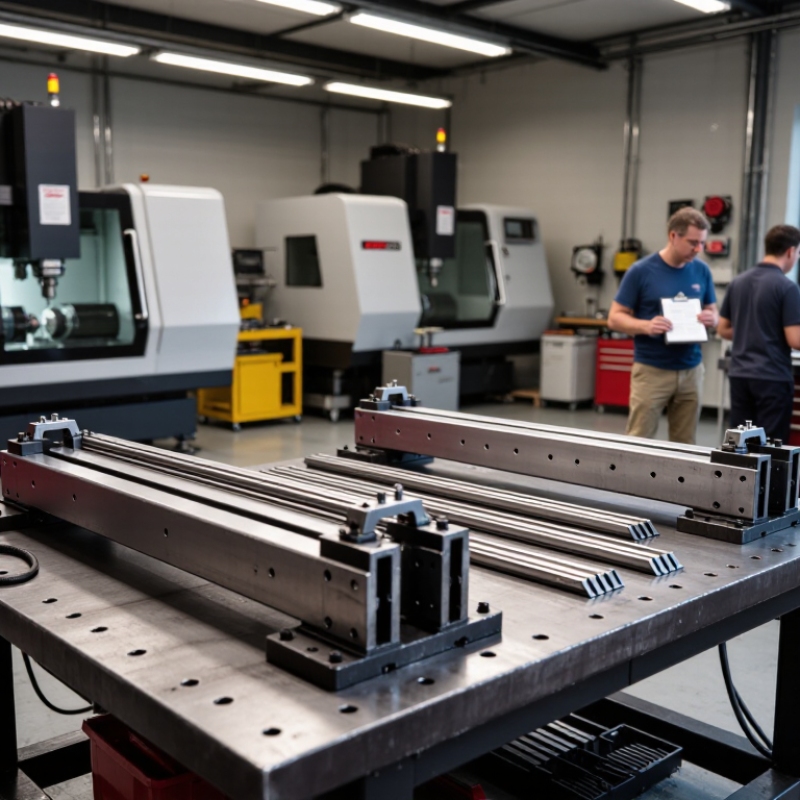
Weld fixture tooling holds parts in position during joining. A typical setup includes a rigid base, locating pins, support blocks, clamps, and sometimes sensors. These elements control part location, resist movement, and keep weld areas accessible. In a production cell, repeatable positioning can reduce fit-up variation and support consistent inspection. Good tooling also leaves room for torch access, cable movement, and spatter removal. Small details matter. A clamp placed too close to a seam may obstruct welding or complicate maintenance.
Tips: Check the fixture with real parts, not only CAD models. Confirm datum contact, clamp reach, operator access, and process clearances. Run a trial cycle and inspect several assemblies for gaps or distortion. Record adjustments; otherwise, small changes may be repeated inconsistently.
Fixture design involves trade-offs. More clamps can improve restraint, but may slow loading and trap heat. A rigid fixture can also hide part variation until the workpiece is released. Review the process with operators and quality staff, then verify results after parts cool. Setups may need adjustment when tolerances, materials, or production rates change. That is normal, though easy to overlook.
2026 Top Weld Fixture Tooling Suppliers Worldwide
The global market is less a single supplier tier than a network of specialists. Large engineering firms deliver integrated cells, controls, and fixture systems for high-volume production. Regional tooling shops often handle custom clamps, locator pins, and replacement components. Between them, automation integrators coordinate equipment, safety systems, and commissioning. The International Federation of Robotics reported 541,302 industrial robot installations worldwide in 2023. That installed base supports demand for compatible, repeatable welding fixtures, though robot figures are not a direct measure of fixture sales.
Supplier choice often follows production risk. A vehicle plant may need rigid, multi-station tooling and documented repeatability. A smaller fabricator may value fast changeovers, accessible spare parts, and local service. Buyers should compare engineering support, material traceability, build tolerances, and validation methods—not just the quoted price. A fixture that looks precise can still drift after heat cycles. That detail is easy to underestimate.
Choosing weld fixture tooling suppliers requires more than comparing quoted prices. A fixture must hold parts securely through heat cycles, clamp access, and production speeds. Ask how the supplier validates datum locations and manages tolerance stack-up. Request an inspection report tied to a real part, not just a polished presentation. Small errors matter. A misplaced locator can shift a seam and cause rework across an entire shift.
Review the engineering process using your drawings and production conditions. Can the team explain clamp sequence, operator access, and how worn contact points will be replaced? Ask for evidence from a trial build, such as repeatability readings and photographs of the setup. A clear change-control process also helps when a part or weld path changes. Good answers should be specific, not only reassuring. That is useful.
Quality systems, delivery planning, and communication deserve equal attention. Confirm who owns design revisions, what checks happen before shipment, and how issues are documented. Compare lead times against realistic milestones, including tryout and correction rounds. Even a careful evaluation can miss problems; I would not treat a successful first sample as proof of long-term stability. Ask how performance is tracked after installation, and whether feedback from operators reaches the engineering team.
| Evaluation Criterion | Weight | Practical Evaluation Benchmark | Evidence to Request |
|---|---|---|---|
| Engineering and fixture design | 15% | Can design around part tolerances, weld sequence, access, distortion control, and operator ergonomics. For complex projects, review tolerance stack-up and datum strategy before design release. | Design review records, 3D CAD model, tolerance analysis, weld-access assessment, and documented design revisions. |
| Manufacturing accuracy and build quality | 15% | Demonstrates measurement and inspection methods suited to the fixture’s required locating and clamping tolerances. Confirm acceptance criteria are agreed before fabrication. | Inspection plan, dimensional inspection report, calibration records for measurement equipment, and fixture acceptance checklist. |
| Welding-process knowledge | 12% | Understands the specified process—such as MIG/MAG, TIG, resistance spot, or laser welding—and accounts for torch or electrode clearance, spatter, heat input, and weld sequence. | Process-specific project examples, welding-access review, clearance checks, and documented input from welding-process engineers. |
| Repeatability and part-location strategy | 12% | Uses defined datums, suitable locating features, and a repeatable loading method. Validate repeatability with production-representative parts and the customer’s measurement method. | Datum and locator scheme, repeatability study, sample-part inspection results, and measurement-system details. |
| Project execution and delivery | 10% | Provides a clear schedule covering design approval, fabrication, tryout, corrections, and shipment. Assess delivery performance against the supplier’s stated commitments. | Project schedule, milestone reporting format, recent on-time delivery data, and escalation process for schedule risks. |
| Tryout, validation, and documentation | 10% | Supports fit-up and production trials, records open issues, and confirms agreed acceptance criteria before final handover. | Tryout plan, issue log, corrective-action records, acceptance report, and as-built documentation package. |
| Serviceability and spare parts | 8% | Designs for routine inspection and replacement of wear items, clamps, locators, and sensors. Confirm spare-part identification and maintenance instructions. | Recommended-spares list, maintenance instructions, component specifications, and service-response process. |
| Automation and controls integration | 7% | Where applicable, can coordinate fixture interfaces with robots, sensors, safety devices, and plant controls. Verify signal definitions and safety responsibilities early. | Interface documents, I/O list, sensor and clamp specifications, safety review records, and integration test plan. |
| Quality and change management | 6% | Maintains documented inspection, nonconformance, corrective-action, and engineering-change processes. Check that revisions are traceable through design and build records. | Quality-system documentation, sample change record, nonconformance workflow, and traceability procedure. |
| Commercial transparency and lifecycle cost | 5% | Provides a clear quotation that separates tooling, design, tryout, shipping, installation, and optional support where relevant. Compare total lifecycle cost, not only initial price. | Itemized quotation, assumptions and exclusions, warranty terms, payment milestones, and proposed lifecycle support costs. |
| Total evaluation weight | 100% | Score each criterion using the same evidence standard for every supplier. Confirm technical requirements and acceptance limits for the specific application before placing an order. | |
Worldwide weld fixture tooling suppliers are best compared by region and specialization, not by a single ranking. North American shops often focus on flexible, low-volume fixtures and quick engineering changes. European suppliers may emphasize precision machining, modular locating systems, and documented process control. Across East Asia, many providers support high-volume production cells, robotic integration, and tight delivery schedules. These are broad patterns, not guarantees; capabilities vary from facility to facility.
Specialization matters more than geography alone. Some suppliers excel at checking fixtures for dimensional verification, while others build heavy-duty weld cells for large assemblies. Ask how they manage datum strategy, clamping access, weld distortion, and repeatability. A fixture that looks precise on a drawing can still be awkward for operators. Details matter. Request sample inspection records, design-change procedures, and evidence of similar project experience. Regional delivery speed is useful, but technical support after installation deserves equal attention.
Tips: Share part models, annual volumes, tolerances, and production constraints before comparing quotes. Ask suppliers to explain their assumptions and flag risks, such as heat distortion or restricted tool access. A short review with production and quality teams can expose gaps early. Supplier categories are helpful, but they simplify a messy market; verify each shop’s actual capacity.
Manufacturing automation proxy: industrial robot density in selected manufacturing hubs (robots per 10,000 manufacturing employees, 2022)
Higher robot density indicates a more automation-intensive manufacturing environment, which can support demand for robotic weld fixtures and related tooling. These figures are not weld-fixture supplier counts, market shares, or a ranking of suppliers. Source: International Federation of Robotics, World Robotics 2023 (2022 robot density).
Automation is changing what weld fixture suppliers are expected to deliver. A fixture must hold parts consistently, while leaving room for robot access, sensors, and safe operator movement. Small changes matter. A clamp placed too close to a weld path can cause repeated pauses or reprogramming. Suppliers increasingly combine modular bases, pneumatic or electric clamps, and sensor-ready mounting points. These features can shorten changeovers when production shifts between related parts. Still, automation is not a cure-all. A highly automated cell can magnify poor locating decisions, and some teams underestimate setup and maintenance time.
Customization now starts earlier in the design process. Experienced suppliers review part geometry, weld sequence, tolerances, and expected production volume before recommending a fixture layout. A practical review may include checking torch clearance, locating-pin access, and how an operator loads a heavy panel. Digital models help, but they need validation against real components; coatings, distortion, and worn tooling can change fit. Ask suppliers how they document adjustments and support replacement components. The less glamorous details matter. Custom tooling can fit one part perfectly yet prove awkward when the next revision arrives. That trade-off deserves an honest discussion.
MSIRobot