| Bluetooth Low Energy Retrofit Lock Residential Apartment Retrofit | Mobile application, temporary digital keys, optional mechanical key, and manual interior thumb-turn. | Bluetooth Low Energy for local operation; remote access normally requires a separate internet-connected gateway. Compatibility depends on the existing cylinder, spindle, backset, and door geometry. | Encrypted local communication, authenticated mobile credentials, administrator-controlled key expiry, and protection against repeated failed attempts should be required. | Prefer products that support local access logs, configurable log retention, user deletion, permission revocation, and clear separation between door data and marketing data. | IEC 60529 for ingress protection where an IP rating is claimed; ETSI EN 303 645 for consumer IoT cybersecurity practices; GDPR may apply when identifiable access logs are processed in the European Economic Area. | Commonly battery-powered. Buyers should verify low-battery warnings, retained credentials during battery depletion, external emergency power contacts, and a mechanical override. | Existing residential doors, rental apartments, serviced apartments, and installations where cloud dependence should be limited. | Confirm cylinder compatibility, offline behavior, firmware-update policy, mobile operating-system support, and whether the claimed security functions are independently tested. |
| Wi-Fi Connected Residential Lock Remote Management Property Operations | PIN code, mobile application, temporary access code, mechanical key, and sometimes biometric authentication. | Direct Wi-Fi or Wi-Fi through a gateway; remote monitoring can integrate with property-management platforms through an application programming interface. | Requires secure account authentication, multi-factor authentication for administrators, encrypted transport, signed firmware, secure credential storage, and rate limiting for PIN attempts. | Buyers should require data minimization, configurable event retention, role-based permissions, export and deletion functions, and a published vulnerability-reporting process. | ETSI EN 303 645 is a relevant baseline for consumer IoT; ISO/IEC 27001 certification of the service provider may support organizational security but does not by itself certify the lock; regional radio approvals are required for wireless equipment. | Battery operation is common, with higher power demand than local-only locks. Verify battery-life conditions, offline PIN behavior, emergency power input, and manual override availability. | Short-term rentals, multi-unit housing, remote property management, and homes requiring access notifications from outside the premises. | Check cloud hosting region, service continuity, subscription terms, API security, support lifetime, account recovery, and the consequences of internet or server failure. |
| Zigbee or Thread Low-Power Lock Smart Home Low Power | PIN code, mobile application through a hub, local automation, temporary credentials, and mechanical override. | Uses a low-power mesh network and normally requires a compatible border router or smart-home hub for remote control. Interoperability depends on the protocol version and device profile. | Network-layer encryption, unique device credentials, secure commissioning, access-role separation, and signed firmware updates should be verified. | A local hub can reduce direct cloud exposure. Buyers should verify whether access events remain local, whether diagnostic data is uploaded, and whether users can disable unnecessary analytics. | For Thread-based products, verify the claimed Matter device type and certification status; for radio equipment, applicable national or regional spectrum and electromagnetic-compatibility requirements must be met. | Typically designed for efficient battery use. Verify network-loss operation, hub-failure behavior, battery reporting, emergency power options, and physical key override. | Smart homes, energy-conscious residential developments, and installations already using a compatible home-automation ecosystem. | Confirm protocol version, hub dependency, commissioning security, local control capability, firmware support period, and cross-border radio approvals. |
| Matter-Compatible Smart Lock Multi-Ecosystem Interoperability | PIN code, mobile application, ecosystem-controlled access, temporary credentials, and mechanical key where fitted. | Matter operates over supported IP networks, including Wi-Fi or Thread, with Bluetooth commonly used for commissioning. Actual functions remain dependent on the controller and lock implementation. | Device attestation, encrypted operational communication, authenticated commissioning, access-control management, and secure software updates are important evaluation points. | Interoperability does not automatically guarantee privacy. Verify controller data practices, account-linking permissions, event-log ownership, and local-versus-cloud processing. | Matter certification should be checked through the applicable certification record; wireless products still require the radio, electromagnetic-compatibility, electrical-safety, and cybersecurity approvals applicable in the destination market. | Battery operation is common. Verify whether the lock remains usable when the controller, border router, or internet connection is unavailable. | Global residential projects seeking compatibility across multiple smart-home ecosystems and reduced dependence on a single application. | Confirm certified device type, supported Matter version, controller compatibility, commissioning workflow, firmware-update responsibility, and regional availability of required controllers. |
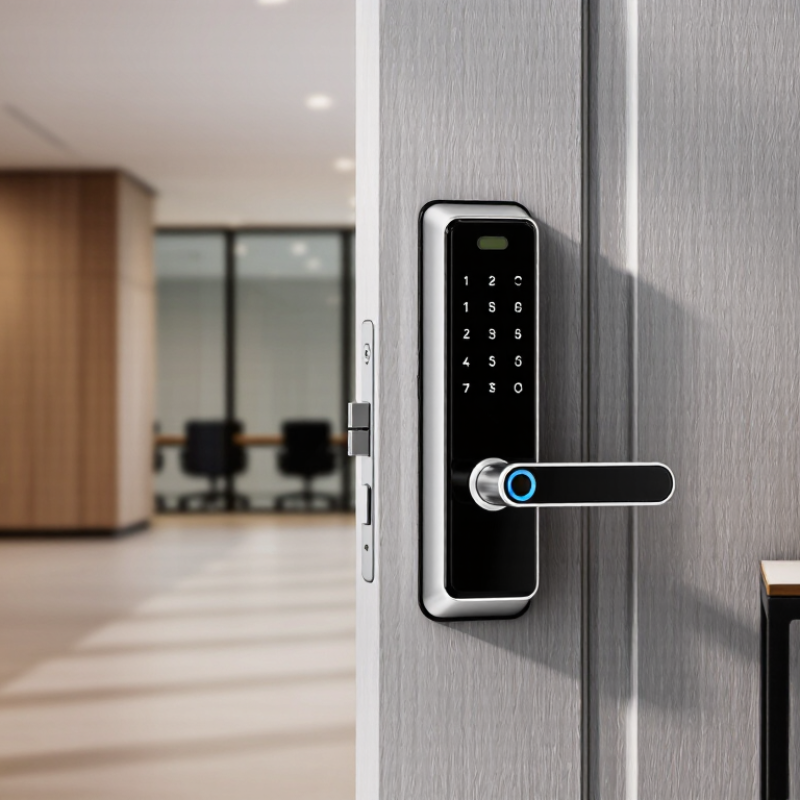
| Fingerprint Biometric Smart Lock Keyless Entry Family Access | Fingerprint template, PIN code, mobile application, temporary code, RFID card in some configurations, and mechanical key. | May operate locally with Bluetooth, Wi-Fi, or a proprietary hub. Fingerprint enrollment and deletion should be possible without a permanent cloud connection. | Biometric templates should be stored as protected templates rather than reversible raw images. Verify anti-spoofing performance, failed-attempt lockout, secure enrollment, and administrator authorization. | Biometric data is highly sensitive in many jurisdictions. Buyers should verify explicit consent mechanisms, purpose limitation, retention and deletion controls, local storage options, and lawful transfer arrangements. | GDPR treats biometric data used for uniquely identifying a person as a special category of personal data; other markets may impose separate biometric privacy obligations. IEC 60529 applies where an IP rating is claimed. | Usually battery-powered, with PIN and mechanical-key fallback. Verify sensor operation with wet or dirty fingers, low-temperature performance, battery alerts, and emergency external power. | Owner-occupied homes, small offices, and locations where users want fast keyless entry without carrying a phone. | Request independent biometric test results, false-acceptance and false-rejection data, template protection details, deletion workflow, and local legal review before deployment. |
| RFID or NFC Access-Control Lock Hotels Commercial Premises | Contactless card, key fob, mobile credential where supported, administrator card, and mechanical emergency key. | May connect to a local access-control system through wired or wireless gateways. Compatibility depends on credential technology, reader frequency, card-security scheme, and management software. | Use modern cryptographic credentials, secure key diversification, revocation lists, protected administrator cards, audit trails, and physical tamper detection where appropriate. | Access records should have role-based visibility, defined retention periods, and controlled export. Avoid storing unnecessary guest identity information on the lock or credential. | Relevant requirements may include ISO/IEC 14443 for proximity cards, ISO/IEC 15693 for vicinity cards, IEC 60839-11-1 for electronic access-control systems, and applicable electrical, radio, and fire-safety rules. | Can be battery-powered or wired depending on the lock architecture. Verify battery replacement access, emergency opening procedures, offline credential lists, and fire-egress requirements. | Hotels, offices, campuses, healthcare facilities, student housing, and other sites requiring centrally managed credentials. | Confirm credential security level, lost-card revocation speed, offline operation, audit-log capacity, door-hardware compatibility, and local life-safety approval. |
| Commercial Grade Electronic Mortise or Panic-Hardware Lock High Traffic Business Security | PIN code, credential card, mobile credential, biometric reader integration, scheduled permissions, and mechanical override. | Wired Ethernet, RS-485, wireless mesh, or a dedicated access-control controller may be used. Integration requires compatibility with the building-security platform and door hardware. | Should support centralized identity management, role-based access, tamper alarms, secure boot or signed firmware, encrypted communications, and documented fail-safe or fail-secure behavior. | Detailed access logs require strict governance, especially in workplaces and healthcare environments. Apply least-privilege access, retention limits, audit review, and documented administrator responsibilities. | EN 14846 covers electromechanically operated locks and striking plates in relevant European applications; EN 1634-1 may be relevant to fire-resistance testing of door assemblies; local building and egress rules remain decisive. | Often powered by building wiring with battery backup or emergency release provisions. Verify power-failure mode, fire-alarm interface, request-to-exit hardware, and emergency evacuation compliance. | Offices, schools, hospitals, warehouses, public buildings, and multi-door enterprise access-control deployments. | Require complete door-assembly testing, life-safety documentation, cybersecurity architecture, controller redundancy, service support, spare-parts availability, and local authority acceptance. |
| Outdoor Gate and Perimeter Smart Lock Outdoor Use Perimeter Access | PIN code, mobile credential, RFID credential, remote release, scheduled access, and manual override where permitted. | Bluetooth, Wi-Fi, cellular gateway, wired access control, or long-range low-power networking may be used. Network selection should match the site’s coverage and power conditions. | Encrypted communications, anti-tamper monitoring, credential revocation, replay protection, physical attack resistance, and protected remote-release commands are essential. | Camera, location, and entry-event data should be collected only when necessary. Verify access-log retention, user consent, data residency, and administrator accountability. | IEC 60529 IP ratings should be verified against the complete installed product; EN 1627 may be relevant to burglary-resistance classification for suitable doorsets, while gates and barriers may have separate local requirements. | May use wired power, rechargeable battery, replaceable battery, or solar-assisted power. Verify operating temperature, drainage, corrosion resistance, low-power fallback, and manual emergency release. | Residential gates, storage compounds, farms, construction sites, shared amenities, and remote facilities. | Confirm the IP test basis, corrosion protection, temperature range, cellular coverage, vandal-resistance testing, emergency access plan, and compliance with local access and egress rules. |