
2026 How to Choose an Explosion Proof LED Floodlight?
Choosing an explosion-proof led floodlight is not just a matter of comparing wattage or price. The right fixture must suit the specific area, operating conditions, and lighting task. A unit that looks rugged may still be unsuitable if its certified protection markings do not match the site’s requirements. Check the product documentation carefully, and confirm that its certification applies to the intended location. When in doubt, consult a qualified safety or lighting professional.
Start with the work happening beneath the light. A loading bay may need broad, even coverage, while a tank inspection point may need a tighter beam. Consider mounting height, required brightness, glare, color temperature, and how easily workers can maintain the fixture. Dust, moisture, salt air, vibration, and temperature swings also affect long-term performance. Small details matter. A bright lamp can still leave deep shadows behind pipes or equipment.
Compare the housing, lens, seals, heat management, driver, and expected service life—not just the advertised lumen figure. Ask for test reports, installation guidance, warranty terms, and clear instructions for inspection and maintenance. Check whether the fixture’s operating temperature range fits the actual site, including hot days and enclosed spaces. Real installations can be less tidy than product photos suggest. Cable routing, brackets, and access for future servicing may become awkward after installation. This guide explains how to assess these factors, compare specifications, and choose an explosion-proof led floodlight with practical performance and dependable documentation. A careful review now can prevent costly mismatches later.
What Is an Explosion-Proof LED Floodlight?
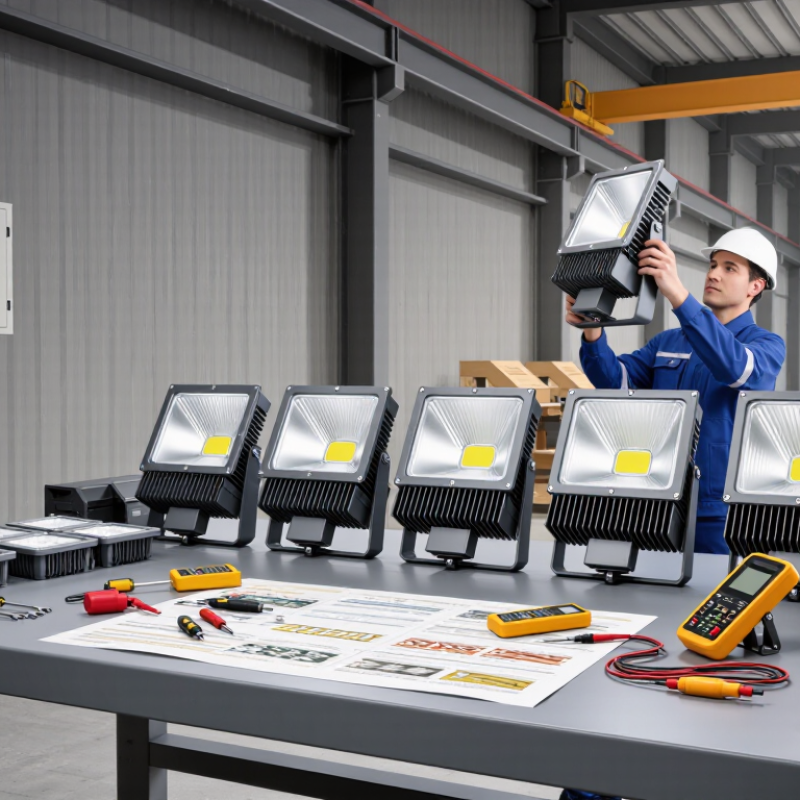
An explosion-proof LED floodlight is a light designed for hazardous locations where flammable gas, vapor, or combustible dust may be present. Its enclosure is built to contain an internal ignition and limit flame or hot gases escaping into the surrounding atmosphere. The fixture does not stop an explosion from happening. That distinction matters. In IEC terminology, related protection concepts include “flameproof” enclosures, addressed in the IEC 60079 series.
The enclosure, cable entries, seals, and lens all matter. A small scratch or mismatched fitting can undermine protection. Buyers should check the certification for the specific gas or dust group, temperature rating, and site classification, rather than relying on “explosion-proof” printed on a label. The U.S. Bureau of Labor Statistics recorded 106 fatal occupational injuries from fires and explosions in 2022, in its Census of Fatal Occupational Injuries. That figure covers many kinds of workplaces and does not measure lighting performance; it does underline why equipment selection and installation deserve care. Even a certified floodlight can be the wrong choice if its rating does not match the actual hazard or operating temperature. I would verify the marking against the site conditions, then have a qualified professional review the installation.
| Selection Dimension | What to Check | Practical Guidance |
|---|---|---|
| What it is | A luminaire designed and certified for use in specified hazardous locations where flammable gas, vapor, mist, or combustible dust may be present. | Its protection depends on the complete certified construction and installation—not on the LED light source alone. Follow the product certificate and installation instructions. |
| Hazardous-area classification | The site’s applicable system and area classification, such as IEC/ATEX Zones or North American Class/Division or Zone designations. | Confirm the exact location classification with the site’s hazardous-area documentation and the authority having jurisdiction. Do not assume that Zone and Division markings are interchangeable. |
| Gas or dust group | The required gas/vapor or combustible-dust group stated in the equipment marking and certification. | Verify that the marked group covers the substances present at the site. Gas and dust classifications use different group systems. |
| Temperature class and surface temperature | The luminaire’s marked temperature class or maximum surface temperature, compared with the ignition requirements of the site’s substances. | Select equipment whose permitted temperature is suitable for the identified hazard, including the expected ambient temperature and operating conditions. |
| Certification and marking | Applicable approvals and the full equipment marking, such as ATEX or IECEx certification where required, or approvals applicable in the installation jurisdiction. | Check the certificate, permitted area, gas or dust group, temperature limits, ambient range, and any special conditions of use. A general-purpose IP rating is not hazardous-area certification. |
| Ingress protection and environment | The IP rating, corrosion resistance, resistance to water or dust exposure, and suitability for the site’s cleaning and weather conditions. | Choose an enclosure suitable for the actual environment. IP protection addresses ingress under defined test conditions; it does not establish explosion protection. |
| Light output and efficacy | Delivered lumens, lumens per watt, mounting height, task illuminance, and the effects of optics and enclosure design. | Base the selection on a lighting layout or photometric calculation for the task area. Do not compare fixtures by wattage alone. |
| Beam distribution and glare | Available beam patterns, aiming requirements, uniformity, spill light, and glare at the intended mounting position. | Select optics for the application—for example, broad coverage for open areas or a more controlled distribution for specific work zones—and verify the result with photometric data. |
| Ambient temperature | The certified operating ambient range, including local heat sources, weather, and enclosure conditions. | Ensure the expected site temperature falls within the luminaire’s marked and certified range; output or service life may be affected outside specified conditions. |
| Electrical supply and controls | Supply voltage and frequency, driver compatibility, inrush current, dimming method, and any required emergency-lighting arrangement. | Confirm electrical ratings and permitted accessories against the equipment documentation. Use only controls and components suitable for the hazardous-area installation. |
| Construction and mounting | Housing and lens materials, mounting orientation, bracket strength, cable entries, and compatibility with the site’s corrosion and vibration conditions. | Check that cable glands, conduit entries, fasteners, and mounting accessories match the certified configuration and local installation requirements. |
| Maintenance and lifecycle | Cleaning access, replaceable parts, driver and LED service information, warranty terms, and required inspection procedures. | Plan inspection and maintenance in accordance with the manufacturer’s instructions and applicable regulations. Isolate power and follow site safety procedures before servicing. |