Icon about-block-ico-1 Icon about-block-ico-2 Icon about-block-ico-3 Icon about-block-ico-4 Icon announcement-close Icon arrow-left Icon arrow-right Icon arrow-sm Icon asterisk Icon banner-transparent-vector Icon btn-callback-ico Icon careers-item-location Icon careers-item-time Icon careers-item-type Icon careers-mail-ico Icon careers-phone-ico Icon careers-search-ico Icon careers-single-hero-vector Icon careers-single-more-vector Icon careers-vector Icon check Icon close Icon dfm-image-left-vector Icon dfm-image-right-vector Icon document Icon download-popup-vector Icon dropdown Icon envelope Icon facebook Icon faq-banner-bg Icon faq-title-ico-active Icon faq-title-ico Icon featured-links-block-bg Icon figure-1 Icon figure-10 Icon figure-11 Icon figure-12 Icon figure-13 Icon figure-14 Icon figure-15 Icon figure-2 Icon figure-3 Icon figure-4 Icon figure-5 Icon figure-6 Icon figure-7 Icon figure-8 Icon figure-9 Icon file-upload Icon form-sidebar-back Icon form-step-done Icon gmap-marker-group-icon Icon gmap-marker-icon Icon header-profile-ico Icon instagram Icon link Icon linkedin Icon loader Icon mail Icon phone Icon play-yt Icon play Icon post-nav-arr-left Icon quote-banner-vector Icon quote-block-aside-vector Icon quote-contact-phone-ico Icon quote-contact-position-ico Icon sidebar-location Icon sidebar-phone Icon technology-banner-nav-left-vector Icon technology-banner-nav-right-vector Icon twitter Icon webinar-item-date-vector Icon whitepaper-img-ico-left Icon whitepaper-img-ico-right Icon whitepapers-listing-banner-ico Icon whitepapers-single-aside-vector Icon youtube Icon yt-play-button

2026 Best Clamp On Water Meter for Global Buyers?

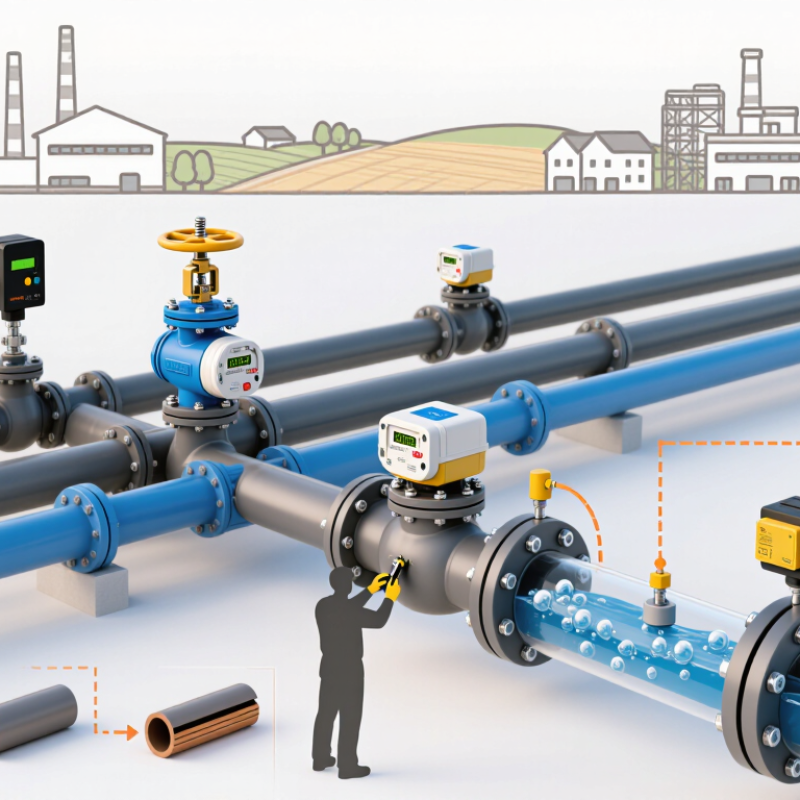
In 2026, global buyers are looking for a Clamp On Water Meter that installs quickly and measures reliably. Unlike conventional meters, it does not require cutting the pipe or stopping water flow. This advantage matters in factories, commercial buildings, farms, and municipal networks. A maintenance team can attach sensors to an existing steel, PVC, or ductile iron pipe. Water service may continue during the inspection.

However, choosing the right model requires more than comparing advertised accuracy. Pipe material, diameter, wall thickness, water quality, and flow range all affect performance. Ultrasonic technology often works well, but poor sensor alignment can create unstable readings. Air bubbles, rust, thick coatings, and partially filled pipes may also reduce signal quality. Small details matter.

This guide examines practical factors for selecting the best Clamp On Water Meter for international projects. It considers accuracy claims, sensor compatibility, battery life, data logging, communication options, installation support, and calibration evidence. Buyers should also check regional certification requirements and after-sales service. A low purchase price may become expensive when replacement sensors are difficult to obtain. That point is easy to overlook.

Real installation experience suggests that no single meter suits every pipeline. Product specifications can appear impressive, yet field conditions may tell a different story. Buyers should request test reports, confirm operating limits, and ask for demonstrations using similar pipes. Some recommendations remain uncertain without site data. Careful verification is essential before placing a large order.
2026 Best Clamp On Water Meter for Global Buyers?

What Is a Clamp-On Water Meter and How Does It Work?

2026 Best Clamp On Water Meter for Global Buyers?

A clamp-on water meter measures flow without cutting or opening the pipe. Its sensors attach to the outside surface with straps, brackets, or acoustic gel. Most models use ultrasonic signals. One sensor sends sound downstream, while another receives it upstream. Flow changes the travel time between them. The meter converts that difference into velocity and volume.

The pipe remains sealed.

This design suits temporary surveys, retrofit projects, and facilities where shutdowns are costly. Installation usually requires the pipe diameter, material, wall thickness, and water temperature. The technician enters these details into the meter. The sensors must also sit at the correct spacing and alignment.

A clean, smooth pipe surface improves signal quality. Rust, heavy lining, air bubbles, and suspended solids can weaken the reading.

Doppler-style clamp-on meters work differently. They detect sound reflected by particles or bubbles in the water. They can perform well with wastewater or liquid containing solids, but clear water may challenge them. Ultrasonic transit-time meters often suit cleaner water. Neither method is universally best.

In field checks, installation quality often matters more than the screen resolution. A loose sensor can create believable but wrong numbers. I have seen readings change after repositioning the clamps by only a few centimeters. That is easy to overlook. Buyers should compare repeatability, pipe compatibility, temperature range, data logging, and calibration support. A portable meter may be convenient, but long-term monitoring needs stable mounting and routine verification.

Key Technologies Used in Modern Clamp-On Water Meters

2026 Best Clamp-On Water Meter for Global Buyers?

Modern clamp-on water meters rely mainly on ultrasonic transit-time technology. Two sensors send sound through the pipe, then measure the travel-time difference. The result estimates flow without cutting the line or stopping service.

Signal quality matters. Advanced meters adjust for pipe-wall thickness, temperature, and changing water conditions. Some use multi-path sensing to reduce errors from turbulence. Doppler processing can measure liquids containing suspended particles, but clean water usually favors transit-time measurement. Field technicians should still confirm pipe material, diameter, lining, and empty-pipe risks before installation.

The AWWA M36 Water Audits and Loss Control Programs manual stresses accurate district-level measurement for reducing non-revenue water. UN-Water’s 2024 World Water Development Report also highlights growing pressure on limited freshwater supplies. These findings support practical monitoring, especially where permanent meter installation is expensive or disruptive.

Data connectivity is becoming equally important. Battery systems, local data logging, pulse outputs, and wireless protocols can support remote inspections. However, wireless range often weakens inside concrete chambers. It happens. Buyers should request evidence from ISO 4064 or OIML R49-based testing, while checking installation limits and calibration records. A clamp-on meter is convenient, not automatically accurate. Pipe conditions can quietly decide the result.

How to Compare Accuracy, Pipe Compatibility, and Installation Methods

2026 Best Clamp On Water Meter for Global Buyers?

Selecting the best clamp-on water meter starts with accuracy, not marketing claims. Ultrasonic meters need a full, stable pipe and clean sensor contact. Check the stated accuracy range at different flow rates. A meter accurate at peak flow may perform poorly during night-time demand. Pipe material also matters. Steel, ductile iron, PVC, and lined pipes can produce different signal quality. In field checks, air bubbles and sediment often cause more trouble than the meter itself.

Tips: Confirm pipe diameter, wall thickness, lining, and fluid temperature before ordering. Keep records of installation conditions. They explain later errors.

Pipe compatibility affects both measurement and installation. External sensors usually avoid cutting the pipe, reducing shutdown time and leakage risk. However, insulation, heavy corrosion, painted surfaces, or nearby bends may weaken the signal. Follow the required straight-pipe distance when possible. Mark the sensor positions carefully. Apply coupling gel evenly, then tighten the straps without crushing the pipe. Small alignment mistakes can matter.

Installation methods vary by site conditions. A temporary survey setup helps test signal strength before permanent mounting. For buried or crowded pipelines, access may be the real limitation. Battery life, display readability, data logging, and local calibration support also deserve comparison. I would not trust a specification sheet alone. A practical trial can reveal awkward controls or unstable readings. That extra check takes time, but skipping it can cost more.

Best Clamp-On Water Meter Features for Global Buyers in 2026

In 2026, global buyers need clamp-on water meters that fit real field conditions, not just laboratory promises. A non-invasive design measures flow through the pipe wall, so technicians avoid cutting pipes or stopping production. This matters in hospitals, factories, farms, and older municipal systems.

Accuracy begins with compatibility. Check pipe diameter, wall thickness, lining, material, and water temperature before ordering. Stainless steel, plastic, and lined pipes may produce different signal conditions. A reliable meter should provide clear setup guidance, stable sensors, and adjustable measurement parameters. Some installations need a straight pipe section before and after the sensors. Space is not always available.

Choose a strong enclosure for outdoor sites. A suitable ingress rating, readable screen, and sealed connectors help during rain, dust, and routine cleaning. Battery life also matters when power is unavailable. Data logging, USB or wireless export, and multiple flow units support international teams. Confirm whether the device offers traceable calibration documents and understandable test procedures. Regional electrical requirements should be checked by qualified personnel.

Small details affect trust. A clamp must hold firmly without damaging the pipe. The display should remain visible in weak light. Support materials should use plain technical English and show practical examples. I have found that quick installation claims can be optimistic. Air bubbles, poor sensor spacing, or changing pipe conditions can reduce readings. Buyers should compare field verification results, not only advertised accuracy. Reliability grows from careful setup, documented checks, and honest limits.

International Standards, Supplier Checks, and Total Ownership Costs

For global buyers, a clamp-on water meter should be judged beyond purchase price. The 2024 UN World Water Development Report notes that agriculture uses about 70% of global freshwater withdrawals. Reliable flow data can expose night leakage, pump inefficiency, and abnormal consumption. Yet installation quality often matters more than the brochure suggests. Pipe lining, air pockets, vibration, and changing water temperature can distort readings.

Check the applicable standard before requesting quotations. ISO 4064 and OIML R49 are important references for water-measurement accuracy, but not every clamp-on device qualifies for every billing application. Ask for test conditions, accuracy curves, repeatability data, and calibration records. Calibration should be traceable to an ISO/IEC 17025-accredited laboratory. Review ingress protection under IEC 60529 and electromagnetic compatibility evidence under IEC 61326 where site conditions demand it. A supplier should also explain sensor placement, pipe-size limits, signal strength, and commissioning support.

Total ownership cost includes the meter, mounting hardware, installation labor, verification, battery replacement, software access, and future recalibration. A low quote can become expensive when technicians repeatedly return to correct unstable signals. Request a sample report from a comparable pipe, not only a factory certificate. Ask about spare sensors and response time. The 2023 WHO and UNICEF Joint Monitoring Programme reported that 2.2 billion people lacked safely managed drinking water, showing why dependable measurement matters. Still, buyers should remain cautious: no instrument removes uncertainty, and field validation is sometimes imperfect. Test one line first.

MSIRobot