201 vs 304 vs 430 Stainless Steel Plate Which Is Best?
Choosing between 201, 304, and 430 stainless steel plate is not just a price comparison. The right choice depends on where the plate will be used, how it will be fabricated, and what conditions it must withstand. The 201 304 430 Stainless Steel Plate comparison explains the practical differences without treating one grade as best for every project.
Grade 201 often appeals to buyers seeking a lower-cost option for indoor or less demanding applications. Its corrosion resistance is generally lower than 304, so exposure to moisture, salts, or cleaning chemicals deserves careful consideration. Grade 304 is widely used for kitchen equipment, food-service surfaces, and other settings where corrosion resistance and formability matter. Grade 430 is magnetic and can suit indoor trim, appliances, and applications where moderate corrosion resistance is sufficient. Details matter.
A plate beside a dry indoor wall faces different demands from one near coastal air or frequent washdowns. Surface finish, thickness, welding requirements, and maintenance can also affect performance. This guide compares those factors, along with cost and common applications, to help narrow the options. A grade name alone cannot guarantee a good result; specifications and actual service conditions should be checked before purchasing. And sometimes, the cheapest plate becomes the expensive choice.
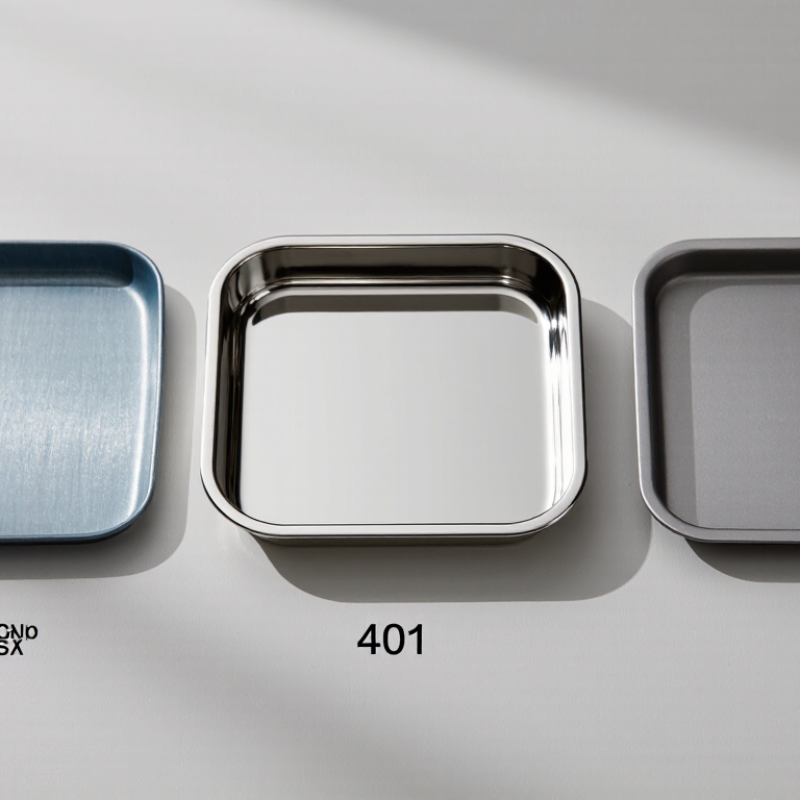
What 201, 304, and 430 Stainless Steel Plates Are
201, 304, and 430 are distinct stainless steel grades, not interchangeable versions of one material. ASTM A240/A240M composition tables specify 201 at roughly 16–18% chromium, 3.5–5.5% nickel, and 5.5–7.5% manganese. Grade 304 contains about 18–20% chromium and 8–10.5% nickel. Grade 430 has about 16–18% chromium and very little nickel. These figures explain part of each plate’s behavior. Nickel and chromium help support corrosion resistance; manganese helps make lower-nickel 201 possible. 201 can suit indoor panels and formed parts, but damp, salty surroundings may expose its limits sooner than 304. Check the service environment, not just the price.
304 is an austenitic grade, typically nonmagnetic when annealed, and is widely used for kitchen surfaces and food-processing equipment. 430 is ferritic and magnetic, often chosen for dry indoor trim, appliance panels, and heat-resistant components. It generally costs less than 304, but offers less corrosion resistance in many demanding settings. A practical check: test a sample with a magnet, then inspect the finish and edges for scratches or crevices. Magnetism alone does not identify a grade. ASTM composition limits identify chemistry, not guaranteed field life; fabrication, cleaning, and exposure matter too. The comparison is tidy on paper. Real plates are less tidy. Ask for material test documentation when grade verification matters.
201 vs 304 vs 430 Stainless Steel Plate: Which Is Best? — What 201, 304, and 430 Stainless Steel Plates Are | Comparison Point | 201 Stainless Steel | 304 Stainless Steel | 430 Stainless Steel |
| Steel family | Austenitic stainless steel | Austenitic stainless steel | Ferritic stainless steel |
| Typical composition by weight | Chromium 16–18%; nickel 3.5–5.5%; manganese 5.5–7.5% | Chromium 18–20%; nickel 8–10.5%; manganese up to 2% | Chromium 16–18%; nickel up to 0.75%; manganese up to 1% |
| Corrosion resistance | Moderate; generally less resistant than 304, particularly in chloride-rich or persistently damp environments | Good general-purpose resistance to atmospheric corrosion and many food-processing environments | Moderate in mild indoor and atmospheric conditions; less suitable for chloride exposure |
| Magnetic behavior | Usually weakly magnetic or nonmagnetic when annealed; cold working can increase magnetism | Usually nonmagnetic when annealed; cold working can make it somewhat magnetic | Magnetic |
| Formability | Good; commonly used for formed components and drawn products | Very good; suitable for a wide range of forming operations | Good for many bends and simple formed shapes; less suited to severe drawing than austenitic grades |
| Weldability | Generally weldable with appropriate procedures; the application and section thickness matter | Very good with common stainless-steel welding processes | Can be welded, but heat control and suitable procedures are important to limit grain growth and loss of toughness |
| Common plate applications | Indoor panels, kitchen equipment, decorative parts, and general formed products | Food-processing equipment, sinks, tanks, architectural components, and general-purpose fabrication | Appliance panels, indoor trim, automotive decorative parts, and mild-environment equipment |
| Relative material cost | Often lower than 304, though prices vary with market conditions, thickness, and finish | Often higher than 201 and 430 because it contains more nickel; actual pricing varies | Often competitive for mild-service uses; actual pricing varies by market and product specification |
| Best fit when | Cost is important and the service environment is relatively mild | A balanced combination of corrosion resistance, formability, and weldability is needed | Magnetic behavior is acceptable and the application has mild corrosion demands |
| Composition figures are typical grade ranges and can vary by governing standard and product specification. Select a grade based on the service environment, fabrication method, required finish, and applicable material standard; none of these grades is suitable for every corrosive condition. |
How Their Composition and Structure Differ
The numbers 201, 304, and 430 describe different alloy recipes, and those recipes shape how each plate behaves. Grade 201 is an austenitic stainless steel. It uses less nickel than 304, with manganese and nitrogen helping stabilize its structure. Grade 304 also has an austenitic structure, supported by chromium and nickel. In typical specifications, it contains roughly 18% chromium and 8% nickel, though exact limits depend on the standard. Grade 430 is ferritic, with chromium as its main alloying element and little or no nickel. Its crystal structure differs from the other two. A simple clue: 430 is magnetic; 201 and 304 are usually less magnetic, though cold working can change that.
These structural differences show up during fabrication. A 304 plate often forms and welds predictably, while 201 can be a practical alternative where cost matters and exposure is moderate. But lower nickel does not automatically mean poor quality; service conditions matter. Grade 430 resists oxidation in many indoor settings, yet it generally offers less corrosion resistance than 304, especially around salt or persistent moisture. Watch the surface after cutting or forming. Scratches, heat tint, and trapped moisture can reveal weaknesses that a polished sample hides. I would not choose by grade number alone. Check the material certificate, intended environment, and forming requirements; even that can miss details if the plate’s finish or processing differs.
201 vs. 304 vs. 430 Stainless Steel Plate: Composition and Structure
Representative composition values by weight (%)
These values are illustrative, not specification limits; exact chemistry varies by applicable standard and product. Iron makes up most of the remainder. 201 and 304 are austenitic grades; 201 uses more manganese and less nickel, while 304 typically has more nickel. 430 is ferritic, with high chromium and very little nickel. Choose based on required corrosion resistance, forming behavior, magnetic response, and service conditions.
How Strength, Formability, and Corrosion Resistance Compare
Choosing among 201, 304, and 430 depends on the force, forming steps, and environment your plate will face. ASTM A240/A240M specifies minimum yield strengths of about 310 MPa for 201, and 205 MPa for both 304 and 430. That gives 201 an edge on paper. But forming can change the result: 201 work-hardens quickly, so tight bends may need careful tooling and staged operations. 304 is generally more forgiving for deep draws. 430 is less ductile, making sharp bends more demanding.
Corrosion resistance depends on the setting. 304’s higher chromium and nickel content generally suits damp, frequently washed areas better than 201 or 430. Nickel Institute technical guidance notes that chloride exposure can cause pitting in stainless steels; standing salty water is a warning sign, not a minor detail. 430 can perform well indoors and in mild conditions, but coastal spray or chemical cleaning may shorten its service life. 201 can be a cost-conscious choice in dry, low-corrosion settings. Test the actual finish and exposure.
A practical shop check helps. Bend a sample, inspect the edge, and compare finish after cleaning. ASTM strength figures are not a corrosion guarantee. Nor does a stronger grade automatically make the best plate.
Where Each Stainless Steel Plate Grade Is Commonly Used
Grade selection depends on the room, the cleaning routine, and exposure to moisture or salt. 201 stainless steel plate is common in indoor appliances, decorative panels, and light-duty kitchenware. Its lower nickel content can make it a cost-conscious choice. It is less suitable for salty air or persistent dampness. Small details matter.
304 plate is widely used for sinks, food-processing surfaces, beverage equipment, and outdoor architectural panels. Its corrosion resistance generally makes it a safer choice when surfaces face frequent washing or food acids. The International Stainless Steel Forum’s Stainless Steel in Figures 2024 reports 58.4 million tonnes of global stainless-steel crude production in 2023; the report does not break output down by grade. That scale shows stainless steel’s broad industrial role, but it cannot determine which grade suits a specific site.
430 plate commonly appears in appliance housings, indoor wall panels, kitchen equipment, and automotive trim. It is magnetic and often works well in dry, mildly corrosive settings. For a backsplash far from the coast, it may be adequate; beside a commercial sink, 304 is usually the more dependable choice. Real installations are messier than a grade chart: welds, surface finish, cleaning chemicals, and trapped water can change performance. A sample test in the actual environment is often worth the extra effort.
How to Choose the Right Grade for Your Requirements
Choosing between 201, 304, and 430 starts with the service environment, not the price tag. Will the plate face rain, salt, cleaning chemicals, or only dry indoor air? ASTM A240/A240M composition limits list 201 at 16–18% chromium and 3.5–5.5% nickel; 304 at 18–20% chromium and 8–10.5% nickel; and 430 at 16–18% chromium with no more than 0.75% nickel. These figures help explain differences, but they do not predict performance on their own.
For kitchen work surfaces or frequently washed equipment, 304 is often the safer starting point because it generally resists corrosion better than 201 or 430. It is not immune to chloride damage. Salt spray and trapped moisture can still leave pits.
201 can suit cost-sensitive indoor parts, but its lower nickel content makes exposure conditions especially important. 430 is magnetic and can work well on dry interior panels or appliance covers. Small detail, big consequence.
Nickel Institute technical guidance also stresses matching stainless grades to their environment and maintenance conditions. Ask for the mill test certificate, confirm the grade, and consider how edges, welds, and surface finish will be exposed. A plate that looks sound in a showroom may behave differently beside a sink or near coastal air.
This is not a perfect shortcut: actual performance depends on fabrication, cleaning, and site conditions. My choice would change with those details.
